8 Best Team Norms Sample Templates for 2026
Explore 8 ready-to-use team norms sample templates for remote, engineering, and student teams. Includes facilitation prompts and tips for success in 2026.
Your team already has norms. They just might be hidden, inconsistent, and working against you.
You can see them in the meeting where the same two people talk first, in the sprint where nobody admits a task slipped until the deadline is already gone, and in the vague promise that something is “basically done” when testing hasn't started. Those are norms. They are unspoken ones.
That's expensive. Managers influence 70% of the variability in team engagement, which is a strong reminder that team behavior rarely fixes itself. The same research ties strong team practices to better outcomes, including lower absenteeism, lower turnover in high-turnover organizations, higher productivity, and higher profitability. The practical takeaway is simple. If you leave norms implicit, you're leaving performance to chance.
A good team norms sample shouldn't read like a poster in a break room. “Be respectful” and “communicate well” sound fine, but they don't tell a product team what to do on Tuesday at 3:40 p.m. when a dependency breaks, a metric misses, and Slack is full of noise. High-performing teams need clearer operating rules than that.
The eight templates below are built for real teams doing real work. They're designed to move you from accidental culture to an intentional operating system, with a modern workflow in mind and a specific fit for tools like Beyond Time.
Table of Contents
2. Accountability Through Time Tracking and Progress Visibility
6. Collaborative Dependency Management and Milestone Sequencing
8. Contextual Adaptation and Real-World Constraint Integration
1. Transparent Goal Communication and OKR Alignment

The first team norms sample I'd put in place is simple: every person shares what they're trying to achieve, why it matters, and how progress will be judged. Not once a quarter in a slide deck. Continuously, in a place the team can easily see.
Siloed goals create polite misalignment. Engineering prioritizes speed, while Product focuses on learning. Sales often pushes a customer promise that shifts priorities mid-sprint. Although nobody is technically wrong, the team still drifts.
Make goals visible, not private
A useful norm sounds like this: “Every objective has an owner, a rationale, and visible progress. If it's important, it's shared.” That's concrete enough to change behavior.
Teams can borrow the discipline behind OKRs as the goal-setting framework behind Google without copying big-company process overhead. In practice, that means each person publishes current objectives, key milestones, and known blockers. Beyond Time fits well here because it ties goals to daily execution instead of leaving them as quarterly slogans.
A strong version of this norm usually includes a few operating rules:
Share rationale: Don't just post the target. Add one line on why it matters.
Review weekly: Hold a short sync where each person updates milestone movement and dependency risk.
Flag drift early: If daily work no longer supports the stated objective, say it plainly.
Keep one shared view: Store goals in one dashboard rather than scattered docs and chat threads.
Practical rule: If a teammate can't explain how their work connects to the team objective, the problem is usually the system, not the person.
Google, Intel, Spotify, and Stripe are often cited as examples of visible goal alignment, but the detail many organizations overlook isn't the framework. It's the transparency. The norm only works when people can see each other's commitments and adjust before work collides.
2. Accountability Through Time Tracking and Progress Visibility
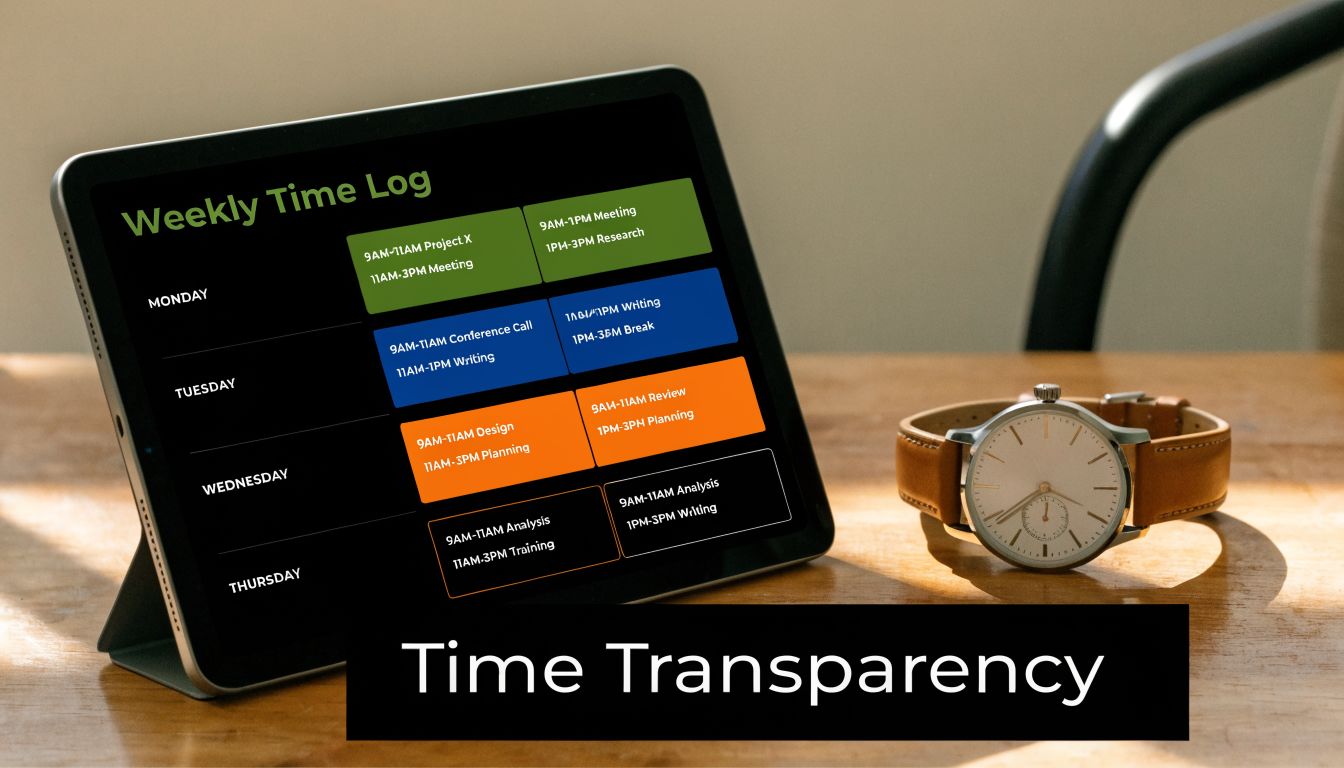
A lot of teams avoid time tracking because they assume it creates surveillance. Bad implementations do. Good ones create shared reality.
The norm isn't “log every minute so management can watch you.” The norm is “we compare what we planned with what happened, so we can stop lying to ourselves about capacity.” That's a completely different conversation.
Track reality, not effort theater
One of the most practical examples comes from the case study in Product Discovery Group's analytics transformation write-up. Teams moved from subjective stakeholder pressure to team-level success metrics and explicit norms around ownership. Before the intervention, work often shipped without validation, and internal audits found a 40% rework rate. After teams adopted clear rules for metric ownership and defining work as unfinished until success metrics were met, all teams adopted the new KPI-based approach within a year, and the organization reported reduced scope creep and faster product iteration.
That lesson applies directly to time. If your team doesn't inspect planned versus actual effort, people will continue estimating based on optimism and memory.
A usable team norm sample here looks like this:
Log in small increments: Use 15-minute blocks so estimates and actuals are close enough to learn from.
Review as a team: Treat variance as planning feedback, not evidence for blame.
Discuss patterns, not excuses: Ask what changed, what was underestimated, and what should be planned differently next time.
Share aggregated insights: Team meetings should focus on recurring bottlenecks, not public shaming of individuals.
Beyond Time's planned vs actual workflow metric guide is useful because it frames time data as accountability with context. That's the right framing.
Teams get better when they can say, “This took longer than expected because review work was hidden,” instead of pretending the estimate was accurate.
Basecamp, Atlassian, GitLab, and Asana all lean on visibility in different ways. What works is transparency tied to learning. What doesn't work is using time data as a proxy for worth.
3. Daily Focus and Highest-Leverage Priority Alignment

Many teams don't have a motivation problem. They have a priority collision problem.
Everyone shows up busy. Everyone has a full task list. Then the day gets split across inboxes, pings, meetings, and “quick asks,” and the highest-value work doesn't move. A strong team norms sample solves that by forcing one visible choice each day.
One priority beats five intentions
The norm can be written in one sentence: “Each team member names their single highest-impact priority at the start of the day and protects time to move it.” This is especially effective for startup teams where interruptions feel normal and expensive work gets buried under reactive work.
You can see versions of this thinking in Warren Buffett's prioritization approach, Paul Graham's writing on focus, Amazon's single-threaded leadership model, and the way strong operators protect maker time. The common thread isn't productivity theater. It's ruthless clarity.
A practical version looks like this:
Choose before inboxes: Decide the day's top priority before email or Slack rewrites the agenda.
Post it publicly: A standup thread or shared workspace is enough.
Protect a block: Put the work on the calendar so meetings don't consume it by default.
Review at week's end: If daily priorities didn't move milestones, the team picked the wrong “important” work.
I've seen this norm fail when leaders ask for a top priority but keep rewarding instant responsiveness. Teams notice that contradiction fast. If the company says focus matters, calendars and messaging habits have to support it.
Beyond Time fits this norm well because the daily AI critique pushes people toward one most impactful action instead of a vague list. That's the kind of friction good norms should create. Not more work. Better choices.
4. Routine and Habit-Based Execution Culture
Monday starts clean. By Thursday, the team is skipping code review checklists, retro notes never get turned into actions, and customer follow-ups depend on whoever happens to remember. That is not a motivation problem. It is an operating system problem.
High-performing teams do not rely on good intentions to keep important work alive. They turn repeated actions into visible, scheduled habits tied to goals and milestones. If a behavior matters often, it needs a trigger, an owner, and a review point.
That is where generic norms like "be accountable" break down. Useful norms are specific enough to survive a busy sprint. In practice, teams usually need a small set of recurring behaviors they can maintain, not a long values document nobody checks after onboarding.
Build routines around recurring risk
The question is simple: where does work slip when people get busy?
For engineering teams, it is often handoffs, QA checks, estimation resets, and dependency follow-ups. For customer teams, it may be renewal prep, meeting notes, and next-step confirmation. Those are not side tasks. They are repeatable points of failure, so they need repeatable controls.
A practical norm looks like this:
Attach routines to moments, not mood: Run the same behavior after a trigger such as PR opened, ticket moved to review, customer call ended, or Friday closeout.
Tie habits to a real outcome: If the routine does not protect quality, speed, or predictability, cut it.
Assign one owner for each recurring action: Shared ownership often becomes no ownership.
Review the routine itself: If a ritual stops helping, change it. Teams should not preserve habits just because they are familiar.
I have seen teams improve execution fast with one simple change: stop treating routines as culture fluff and start treating them as workflow design. A checklist before release, a standing weekly dependency review, or a written retro follow-through habit can prevent the same avoidable miss from happening three sprints in a row.
For teams using Beyond Time, this gets more concrete. Milestones, recurring work patterns, and daily execution data can be tied together so habits support delivery instead of becoming separate self-improvement tasks. The Atomic Habits summary and practical application guide is useful here because the point is not abstract discipline. The point is designing behaviors that make the right action easier to repeat under pressure.
A routine is a team norm with proof. You can see it on the calendar, in the workflow, and in the milestone history.
The trade-off is real. Too many rituals slow people down and create compliance theater. Too few, and quality depends on memory, personality, and heroics. The sweet spot is a short cadence of habits connected to your goals, measured lightly, and revised when the work changes.
5. Pattern Recognition and Continuous Optimization Culture
Some teams argue from memory. Better teams argue from patterns.
That's a useful norm because memory is biased toward the most recent fire, the loudest stakeholder, or the most confident person in the room. Once you start reviewing actual work patterns, a lot of comfortable stories fall apart.
Review patterns before you debate opinions
A strong norm here is: “We review signals from our work before we decide what to change.” In software teams, those signals might include milestone slippage, repeated interruptions, task carryover, or where focus time goes. In creative teams, it might be revision loops or approval delays.
The mistake is trying to track everything. Teams drown in dashboards that nobody acts on. What works is choosing a small set of recurring indicators and attaching one behavior to each review. If this metric is off, what conversation happens next? If there's no action, the metric is decoration.
Useful operating rules include:
Limit the view: Pick a few indicators tied directly to your current goals.
Capture one learning: Every review should produce a written takeaway.
Run one experiment: Change one variable, then inspect whether it helped.
Protect privacy: Share patterns in ways that support learning rather than public ranking.
Netflix, Airbnb, Peloton, and sports teams inspired by Moneyball all reflect this discipline in different settings. The shared lesson is that data becomes valuable only when teams use it to revise behavior.
Beyond Time's pattern intelligence is relevant because it connects goal progress, routine consistency, and time use. That's more practical than generic analytics. Teams often do not need more charts. They need a norm that says, “We study what drives our best days, then we repeat it.”
6. Collaborative Dependency Management and Milestone Sequencing
A team can have talented people, solid goals, and plenty of effort, then still miss because work depends on someone else who didn't know they were on the critical path.
That's why dependency management needs to be a norm, not an occasional project-management rescue move. If your work blocks mine, or my output changes your schedule, that relationship should be visible early.
Map handoffs before they become blockers
The practical norm is this: “Every milestone with a dependency names it, sequences it, and reviews its health before it becomes urgent.” Good teams don't assume handoffs will somehow work themselves out. They surface them.
A useful contrast comes from the team transformation case study in From Worst to First. The team began around the 20th percentile on the Team Accountability Survey and rose to the 80th percentile after explicit norms were established, including communication expectations, accountability commitments, and issue-resolution protocols. One reason that kind of change happens is that ambiguity gets replaced with named commitments.
Here's what that looks like in real work:
Name the owner: Every dependency needs a person, not a department label.
Sequence visibly: Put the dependency in the milestone map where everyone can see it.
Escalate early: “At risk” is not a personal failure. It's a signal to coordinate.
Review weekly: Dependency health should be a standing agenda item on cross-functional work.
This short explainer is useful before teams adopt the norm:
Google, Spotify, Airbnb, and SpaceX-style project environments all depend on sequencing discipline. What doesn't work is pretending dependencies are obvious. They're obvious only after they break.
7. Psychological Safety and Honest Progress Reporting Norms
Monday's standup says everything is green. By Thursday, a milestone slips because one engineer was blocked for three days and never said it plainly. That pattern has little to do with effort and a lot to do with reporting norms.
A useful team norms sample makes accurate status safer than polished status. Teams that perform well do not ask people to “stay positive” or “be respectful” and hope that honesty follows. They build a reporting system where facts surface early, trade-offs get discussed in the open, and progress is visible enough that nobody has to guess.
The norm can be written: “Report reality early, including risk, delay, and uncertainty. We solve issues in the open.”
That sounds basic. In practice, it is hard. People learn fast whether “transparency” means transparency, or whether bad news gets remembered during performance review season. If leaders want honest progress reporting, they have to remove that ambiguity.
What works on real teams is specific:
Leaders model clean reporting: Say what changed, what slipped, and what was misestimated without dressing it up.
Separate project diagnosis from performance evaluation: A delivery risk review should focus on recovery options, not personal judgment.
Define status labels clearly: “On track,” “at risk,” and “blocked” need shared meanings, not personal interpretation.
Use evidence, not confidence theater: Planned versus actual effort, task age, cycle time, and milestone drift keep the conversation grounded.
Acknowledge early risk reporting: Treat “I'm behind” as responsible behavior when it comes with current facts and a next step.
Modern tooling matters in this context. A platform like Beyond Time helps because it gives teams a shared record of what was planned, what got done, and where work is stalling. That changes the tone of the conversation. Instead of arguing about whether someone is committed, the team can examine the work pattern, decide whether scope needs to change, and assign help where it will make a difference.
The trade-off is real. High-visibility reporting can create fear if the team uses data as a surveillance tool. It works only when the rule is clear: progress data exists to improve execution, surface constraints, and reset priorities sooner. It is not a shortcut for blame.
“I'm behind and need help” should signal ownership.
Many teams say they want candor. Fewer teams build the operating rhythm that supports it. The ones that do usually review risks in a calm, repeatable format, ask for facts before explanations, and treat missed assumptions as part of execution rather than a personal defect. That is how psychological safety becomes operational, not aspirational.
8. Contextual Adaptation and Real-World Constraint Integration
The fastest way to create fake accountability is to build plans for an imaginary team with unlimited energy, zero interruptions, perfect health, and no life outside work.
Real teams don't work like that. Founders have investor pressure. Managers have hiring gaps. Parents have school schedules. Remote teams have time zones. A useful team norms sample accounts for reality instead of calling reality a lack of commitment.
Plan for the team you have, not the one you imagine
This norm can be written as follows: “We plan against real capacity and constraints, then adjust goals and routines accordingly.” That sounds obvious, but many teams still reward ambitious plans more than achievable ones.
The gap matters even more in distributed work. Indeed's summary on team norms points to a gap in how advice handles remote execution, noting projections from future-dated research about norm failures tied to misaligned personal workflows and low integrated-tool usage in remote teams in this discussion of team norms guidance. Whether or not a team uses those projections directly, the underlying operational problem is real. Generic norms often ignore how individual workflows collide with team expectations.
What works in practice:
Map constraints openly: Time zone limits, caregiving schedules, energy windows, and recurring commitments should be visible enough to plan around.
Use actual capacity: Time data tells you more than good intentions do.
Build slack deliberately: Plans without breathing room force hidden trade-offs.
Reassess regularly: Constraints change. Norms should adapt with them.
Basecamp's seasonal pacing, Automattic's distributed work design, Patagonia's lifestyle-aware culture, and Slack's focus-friendly scheduling all reflect the same idea. Teams perform better when plans fit human reality.
Beyond Time becomes more than a planning tool in this context. It can connect goals, time use, routines, and context in one system, which makes realistic execution easier than heroic improvisation.
8-Point Team Norms Comparison
| Norm / Title | 🔄 Implementation Complexity | ⚡ Resource & Effort | 📊 Expected Outcomes | ⭐ Key Advantages | 💡 Ideal Use Cases |
|---|---|---|---|---|---|
| Transparent Goal Communication and OKR Alignment | High, requires formal goal definition & alignment cycles | Medium–High, time for goal setting, dashboards, reviews | Improved alignment, reduced duplication, clearer priorities | ⭐⭐⭐⭐, Visibility, accountability, faster decisions | Cross-functional orgs, scaling teams, strategic planning |
| Accountability Through Time Tracking and Progress Visibility | Medium, tooling + cultural adoption needed | Medium, daily logging, planned-vs-actual reviews | Accurate capacity planning, identify time drains, better estimates | ⭐⭐⭐⭐, Objective accountability, actionable insights | Remote teams, capacity management, process optimization |
| Daily Focus and Highest-Leverage Priority Alignment | Low–Medium, daily habit + light coordination | Low, brief daily commitment, protected focus blocks | Reduced context-switching, higher throughput, clearer daily progress | ⭐⭐⭐⭐⭐, Clarity, execution, reduced interruptions | Fast-paced teams, startups, deep-work environments |
| Routine and Habit-Based Execution Culture | Medium, design and embed routines, habit tracking | Medium–High, sustained reinforcement over time | Consistent execution, compounding progress, lower friction | ⭐⭐⭐⭐, Automaticity, resilience, predictable output | Long-term projects, operations, teams needing consistency |
| Pattern Recognition and Continuous Optimization Culture | High, requires data collection, analysis capability | High, analytics, experiments, documentation effort | Evidence-based improvements, non-obvious driver discovery | ⭐⭐⭐⭐⭐, Continuous learning, scalable personalization | Data-driven orgs, product optimization, continuous improvement |
| Collaborative Dependency Management and Milestone Sequencing | Medium–High, mapping and coordination across teams | Medium, planning sessions, dependency maps, buffers | Fewer bottlenecks, realistic timelines, smoother launches | ⭐⭐⭐⭐, Critical-path visibility, better prioritization | Complex projects, cross-functional launches, engineering |
| Psychological Safety and Honest Progress Reporting Norms | Medium, culture change, leadership modeling required | Medium, regular honest check-ins, safe communication practices | Early issue detection, improved trust, better problem-solving | ⭐⭐⭐⭐⭐, Faster resolution, innovation, reduced politics | Creative teams, high-risk projects, learning organizations |
| Contextual Adaptation and Real-World Constraint Integration | Medium, requires personalized assessments & adjustments | Medium, data gathering, periodic reassessment, buffers | Realistic plans, reduced burnout, sustainable momentum | ⭐⭐⭐⭐, Sustainable pacing, personalization, higher follow-through | Distributed teams, wellbeing-focused orgs, long-term programs |
From Sample to System Making Your Norms Stick
Monday at 9:07 a.m. The team has a norms document everyone nodded at two weeks ago, but sprint planning still runs long, blockers still surface late, and three people are working on priorities that no longer matter. That is the moment a "team norms sample" either becomes useful or gets exposed as workshop theater.
Teams do not need nicer wording. They need an operating system they can run under pressure.
The shift is simple to describe and harder to implement. Replace broad behavior ideals with observable rules, attach those rules to existing cadences, and review them against real output. "Communicate clearly" is too vague to coach or inspect. "Flag any blocker that puts this week's milestone at risk before the end of the day" gives the team a clear standard and gives managers something fair to follow up on.
I keep the rollout tight.
Start with a short set of norms the team can remember without opening a document. In practice, that usually means five to eight. More than that, and people start treating the list like policy wallpaper. Less than that, and you leave too much room for interpretation.
Then connect each norm to a trigger in the work itself. Goal alignment belongs in weekly planning and review. Honest progress reporting belongs in standups and one-on-ones. Dependency handling belongs in milestone planning. Daily focus belongs at the start of the day, before Slack and meetings consume attention. If a norm is not tied to a recurring moment, it stays abstract.
Next, make the norm visible in the same place the work is managed. Modern software matters here. Beyond Time is useful because it connects OKRs, milestones, habits, planned versus actual time, daily priorities, and pattern review in one workflow. That moves norms out of a slide deck and into the team's day-to-day operating system. You can check whether priorities were set, whether time went where the plan said it should, and whether routines are producing the outcomes the team expects.
That visibility changes the conversation. Accountability gets more objective. Coaching gets easier. Excuses get replaced with specifics.
Treat norms as versioned working agreements, not permanent commandments. A five-person product squad can operate with informal escalation paths. A fifteen-person cross-functional team usually cannot. A remote team may need explicit response-time and handoff norms that a co-located team can handle informally. Good team leads revisit norms after missed milestones, team growth, process changes, or repeated friction. If the rule no longer fits the work, rewrite it.
There is a trade-off here. More structure improves consistency, but too much structure creates overhead and performative compliance. The goal is not to track everything. The goal is to make the few behaviors that drive execution visible and repeatable.
Use a sample as a starting point. Build a system from it. Test the norms for a few weeks, inspect where they broke down, and keep only the ones that improve execution, speed up coordination, and make accountability fair.
If you want a practical way to turn these norms into daily execution, Beyond Time, offers an AI-powered goal achievement system that connects OKRs, milestones, habits, time tracking, and daily coaching in one workflow. It's built for founders, professionals, students, and self-improvers who need more than generic planning. They need a system that makes accountability visible and progress easier to sustain.
Keep going with Beyond Time
Strong team norms need strong personal systems — here's where to start with Beyond Time.
- Focus Session Planner — Plan deep-work blocks before the day fills with noise.
- Daily Routine Examples for High Performers — See what consistent, high-output daily rhythms look like.
- High-Leverage Activities: 20% That Drives 80% — Find the work that actually moves the team forward.
- Stretch Goals vs Safe Goals: When to Aim High — Set team targets ambitious enough to matter.
Put this into practice
Free tools that match this article.
AI Study Plan Generator
Generate a personalized study plan with proven learning techniques for exam success.
Try Study PlannerTime ManagementWeekly Schedule Template
Plan your week with a free printable weekly schedule template for goals, routines, and focus blocks.
Try Schedule TemplateFocusFocus Session Planner
Create AI-optimized focus sessions with structured work blocks and refreshing breaks.
Try Focus PlannerGoal SettingGoal Setting Worksheet
Turn a vague goal into milestones, habits, blockers, and a weekly review plan.
Try Goal WorksheetKeep exploring this topic
Beyond Time for students
See how students connect semester goals, study blocks, and routines.
Best goal tracking apps
Compare tools for goals, habits, and progress tracking.
Student success guide
Use Beyond Time to plan study sessions, habits, and academic goals.
Best habit tracker apps
Compare habit apps by use case, depth, and daily workflow.
Related Articles

How to Track Multiple Goals Without Getting Overwhelmed
Learn a proven system for managing multiple goals simultaneously without losing focus or burning out. Practical frameworks for tracking 3-5 goals at once.
Accountability Partner Guide: Achieve Goals Faster
Learn how to find, structure, and get the most from an accountability partner. Research shows accountability can boost goal achievement by up to 95%.
5-Year Plan Template: Build Your Life Roadmap Step by Step
Build your life with this step-by-step 5 year plan template. Set goals across 5 key life domains and break them into year-by-year milestones you can act on.
How to Set Life Priorities: A Framework for What Matters Most
Learn how to set priorities in life with a proven values-based framework. Discover what matters most and start building goals aligned with your life today.
Life Audit: The Complete Guide to Redesign Your Life
A life audit helps you step back, evaluate every major area of your life, and redesign it with intention. Discover how to do yours in five clear steps.
How to Stay Motivated: Science-Backed Strategies That Work
Struggling with how to stay motivated on long-term goals? Discover science-backed systems and practical strategies to build lasting motivation that sticks.