
8 Career Goals Short Term Examples & How to Hit Them
Discover 8 SMART career goals short term examples for any professional. Learn how to set, track, and achieve your goals with actionable steps and templates.
A manager asks about your short term career goals in a review. You give a reasonable answer. Get promoted. Build leadership skills. Learn AI. Increase income. The conversation moves on, but nothing changes because the goal never became a working plan.
That gap is the primary problem.
A short term career goal needs three parts. A clear objective, measurable key results, and routines that show up on your calendar. Without that structure, even strong goals stay stuck at the level of intent. As noted earlier, SMART goals consistently outperform vague goals because they force specificity. In practice, the bigger advantage is that they make execution visible.
OKRs help here because they connect ambition to evidence. A strong objective sets direction. Key results define what progress looks like. Daily and weekly habits make the work repeatable. The framework only works, though, if you can track all three in one place instead of scattering them across notes, Slack messages, and end of quarter memory.
That is the angle of this guide. Each example below is built as an operating system for career growth. You will see the goal itself, the milestones that prove movement, and the routines that make those milestones realistic. Beyond Time fits into that process by giving you one place to plan the objective, review key results, block time for the work, and keep a record of progress you can use in reviews, interviews, or salary discussions.
Table of Contents
- 1. Complete a Professional Certification or Skill Badge
- 2. Secure a Promotion or Internal Role Change
- 3. Build and Launch a Side Project or Startup
- 4. Develop Deep Expertise in a High-Demand Technology or Framework
- 5. Increase Your Income by a Specific Percentage 25-50%
- 6. Establish Thought Leadership Through Content Creation
- 7. Transition Careers or Industries Strategically
- 8. Build a High-Performing Team or Mentor Direct Reports
- 8-Point Short-Term Career Goals Comparison
- From Planning to Achieving Your Daily Momentum System
1. Complete a Professional Certification or Skill Badge
You book a certification exam for six weeks from now, then realize the challenge isn't merely the test. It is protecting study time after meetings, choosing the right materials, and finishing with proof that effectively changes your next job conversation.
A short-term certification goal works when the credential changes how hiring managers, recruiters, or internal decision-makers read your profile. AWS Solutions Architect Associate, Salesforce Administrator, Google Project Management Certificate, Certified ScrumMaster, and Google Cloud Associate Cloud Engineer can all do that, but only in the right context. The credential needs to match the role you want next.

Choose a credential that changes your positioning
Pick the exam based on the decision you want someone else to make about you. If you want interviews for cloud infrastructure roles, AWS or Google Cloud makes sense. If you want project ownership, delivery leadership, or stronger operations credibility, PMP or Scrum may carry more weight.
The trade-off is simple. Broad recognition helps with screening, but role-specific relevance helps more in real conversations. A certification you can use in your current projects often beats a more prestigious one that sits disconnected from your day-to-day work.
Constant learning matters, but the credential itself is only part of the value. The better reason to pursue one is that it creates a clear container for skill-building, portfolio updates, and sharper positioning. Pair the exam with one visible output, such as a lab project, process improvement, or internal knowledge share. That is what makes the badge useful.
Run it like a short operating system
Treat the goal as an Objective with supporting Key Results and fixed routines.
- Objective: Earn AWS Solutions Architect Associate within this review cycle.
- Key Result 1: Finish the official exam blueprint and core training by a set date.
- Key Result 2: Score consistently on practice exams, then review weak domains until they improve.
- Key Result 3: Build one small proof-of-skill project and add it to your resume or LinkedIn.
- Key Result 4: Sit for the exam on a booked date.
That structure matters because certification goals fail in predictable ways. People overstudy familiar topics, avoid practice tests because the scores feel uncomfortable, and wait too long to schedule the exam. Booking the date early fixes part of the problem. It creates a constraint.
Use a tool like Beyond Time to turn the goal into milestones, recurring study blocks, and visible progress. If you need a stronger planning framework first, use this guide on how to create a career roadmap that actually works.
Build routines that survive a full workweek
Daily execution should be boring enough to repeat.
A workable pattern looks like this: 30 minutes of focused study before work, 10 minutes of flashcards at lunch, and one 90-minute weekend block for labs or practice questions. That is easier to sustain than trying to recover with marathon sessions on Sunday night.
Practical rule: If the exam date is not booked, the goal is still a draft.
Track actual study time against planned time. The gap matters. I have seen professionals say they are studying four times a week when their calendar shows one serious session and three half-finished attempts. Fix the system before raising the target. Shorter sessions, a cleaner study cue, and one defined next task work better than relying on motivation.
If your certification is part of a broader advancement plan, connect it to visible career movement instead of treating it as a standalone win. These strategies for moving up at work pair well with a certification because they focus on applying proof, not just collecting credentials.
2. Secure a Promotion or Internal Role Change
Your manager says, "You're doing great work." Review season arrives, and the promotion goes to someone else.
That result usually has a simple cause. Strong execution stayed invisible, or it did not map clearly to the requirements of the next role. Promotions and internal moves are decided on evidence of scope, judgment, and business impact. Effort helps, but it is not the deciding signal.
A better short-term goal is specific: earn a promotion within two review cycles, or move from your current function into a defined internal role by a set date. Then run it like an operating system. Set the objective, define measurable key results, and assign recurring habits that make progress visible every week.
Define the promotion case before you try to earn it
Start with the target role, not your current frustration. Pull the job expectations, promotion rubric, or level guide. If your company does not publish one, ask your manager directly, "What would someone at the next level need to demonstrate consistently?" That question saves months of guesswork.
Then translate the answer into proof:
- Objective: Secure a promotion or internal transfer in the next 3 to 6 months.
- Key Result 1: Lead one project with cross-functional ownership.
- Key Result 2: Document measurable outcomes tied to team goals.
- Key Result 3: Close one or two visible skill gaps relevant to the target role.
- Key Result 4: Build support from your manager and at least one stakeholder or sponsor.
Many capable professionals often stall. They collect extra work instead of the right work. More tasks do not create a stronger case if the tasks are low-impact, reactive, or hard for leadership to evaluate.
Build evidence in public
Promotion cases are easier to approve when the story is already obvious. Keep a weekly wins log. Save project outcomes, internal praise, customer feedback, process improvements, and examples of stronger judgment. If you want a lateral move, collect proof from that function before you ask for the title change. A sales professional aiming for product work should show product thinking through customer insight synthesis, roadmap input, or small feature proposals that gained traction.
Use a simple filter each week: did your work show impact, influence, or readiness for the next role?
If the answer is no for several weeks in a row, the problem is rarely motivation. The problem is allocation.
What to build in Beyond Time
Beyond Time works best when you treat the promotion goal as a tracked system, not a vague ambition. Create one promotion objective, then break it into milestones such as role requirements, sponsor conversations, project ownership, and review preparation. Under each milestone, assign routines that can survive a normal workweek.
A practical setup looks like this:
- Monday, 15 minutes: update your wins log with outcomes and proof
- Wednesday, 30 minutes: work on one promotion-relevant deliverable before reactive work expands
- Friday, 20 minutes: review planned versus actual time spent on strategic work
- Biweekly: schedule one visibility action, such as a demo, stakeholder update, or manager check-in
- Monthly: review your evidence against the target role and identify the weakest gap
That review matters. I often see people block time for strategic projects, then lose the week to support requests, meetings, and low-importance admin. Beyond Time makes that mismatch visible fast. Once you can see the gap, you can correct it by protecting one or two blocks for work that strengthens your case.
If you need the broader planning structure, use this career roadmap guide from Beyond Time. If your promotion goal depends on building proof through a visible initiative, a small internal tool, or a scoped portfolio project, this framework for building a side project in 5 hours a week can help you create useful evidence without blowing up your schedule. For manager alignment, timing, and internal politics, these strategies for moving up at work add a useful layer.
Strong candidates make the next role feel low-risk because the evidence already exists.
3. Build and Launch a Side Project or Startup
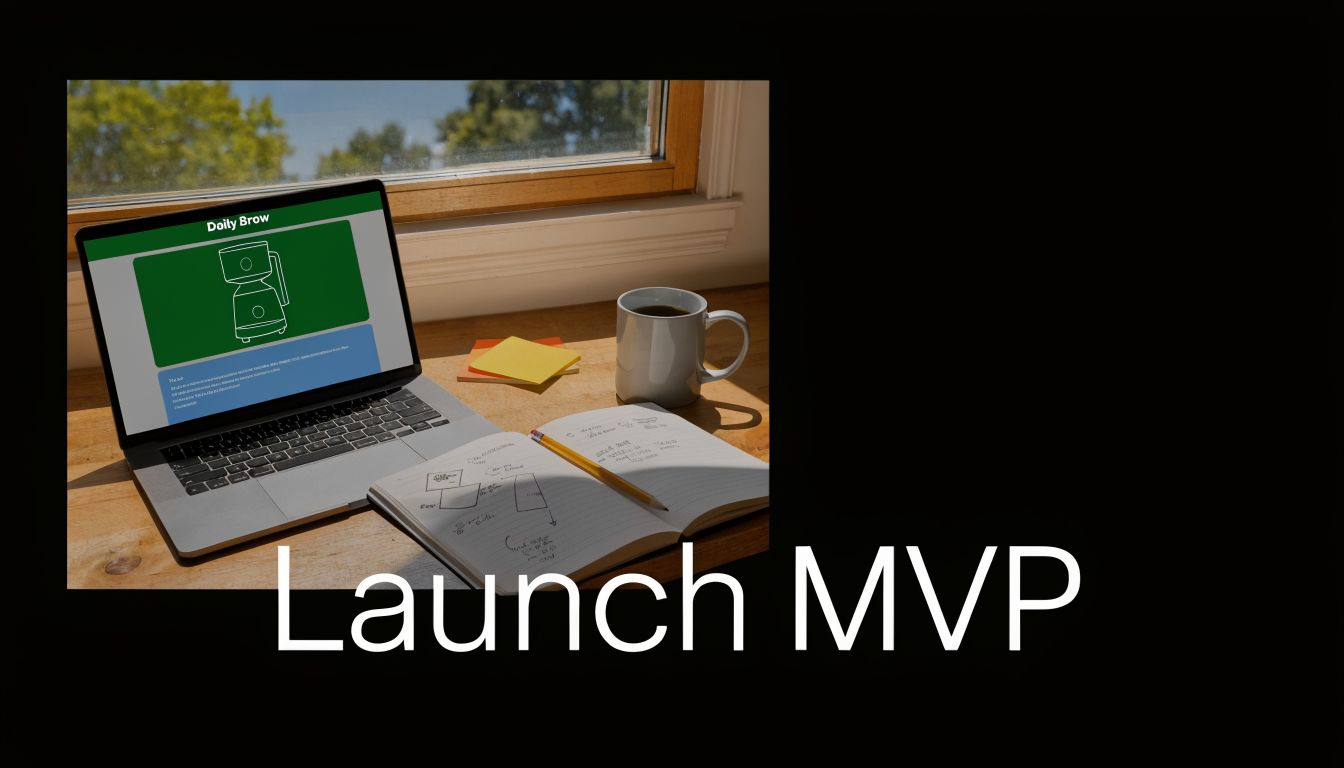
You block out a Saturday to work on your idea, spend three hours comparing tools, tweak the name, sketch features, and end the day with nothing a user can touch. I see that pattern often. The problem usually is not effort. It is scope, sequence, and the lack of a system that forces shipping.
A side project is a strong short-term career goal because it produces public evidence. It can show initiative, product judgment, technical range, and follow-through in a way a resume bullet cannot. It also exposes a real trade-off. If the project is too ambitious for your available time, it turns into a private hobby that never reaches the market.
Reduce scope before you add ambition
Early traction comes from a micro-product with a clear user and one useful outcome. That might be a niche calculator, a template pack, a small workflow tool, a lightweight SaaS with one core feature, or an internal script repackaged for a broader audience. Complexity can wait. Shipping cannot.
Set the goal in three layers so the work stays operational.
Your Objective might be: launch an MVP in four months.
Your Key Results might be: interview five target users, build one usable version, onboard three beta testers, and publish a live landing page.
Your Routines and Habits might be: 45 minutes for customer research on Tuesdays, 60-minute build blocks on weekdays, and a Friday review to compare planned work with actual progress.
That structure matters because side projects fail in predictable ways. Research drifts. Build time gets pushed behind paid work. Feedback arrives too late. A simple operating system fixes a lot of that.
Start with the smallest version someone else can use without your explanation.
Build a weekly shipping cadence
In Beyond Time, map the work as sequential milestones: concept validation, MVP build, beta feedback, public launch. Then assign each milestone to calendar blocks you can protect. For working professionals, five focused hours each week can beat a single overloaded weekend session because the project keeps moving and decisions stay fresh.
Track the work in small increments so you can see where the time goes. If user interviews were planned but all the hours went into design tweaks, the problem is visible immediately. That is the advantage of connecting the goal to milestones and then to daily execution. You are not relying on motivation. You are managing a pipeline.
If your schedule is tight, use this side project framework for building in five hours a week as the operating model.
Later in the process, this walkthrough is worth watching for shipping mindset and momentum:
A few patterns consistently waste time: building features before talking to users, reworking branding before the offer is tested, and treating tool selection as progress. Strong side projects usually follow a simpler path. One target user. One painful problem. One release date. Then a review cycle based on real usage, not guesses.
4. Develop Deep Expertise in a High-Demand Technology or Framework
Monday starts with Slack questions you can answer halfway. By Thursday, someone else has solved the harder issue, written the fix, and become the person leadership remembers. That gap is usually not raw talent. It is depth.
For a short-term career goal, depth creates more career value than sampling five tools at once. Pick one technology or framework that already shows up in roles you want. Generative AI integration, Kubernetes, React, Apache Spark, data engineering, or cloud architecture are good examples if they match your market and your background. The goal is not to know a little more. The goal is to become useful enough that people trust you with real work.
This works best for professionals who already have baseline competence and need a sharper professional identity. Generalists often stay busy. Specialists get pulled into higher-value decisions.
Build expertise in three stages
Strong specialization plans follow a clear sequence. First, get the fundamentals stable. Second, apply them in controlled projects. Third, produce work other people can inspect and use.
If you are targeting Kubernetes, that means learning cluster basics, deployments, networking, and observability first. Then set up real deployment exercises, break things on purpose, and recover them. After that, publish a runbook, architecture note, demo repo, or internal training session. Expertise becomes credible when it leaves evidence.
I see one failure pattern constantly. Professionals mistake exposure for skill. Courses, conference talks, newsletters, and saved repos create familiarity, but familiarity does not hold up in an interview, design review, or production incident. Calendar time has to go to practice under constraints.
Use an operating system, not a vague learning plan
Treat this goal like an execution system.
- Objective: Become the go-to person on LLM integration for business workflows.
- Key Result: Finish a focused curriculum covering prompting, APIs, evaluation, and guardrails.
- Key Result: Build two working projects tied to real business use cases.
- Key Result: Publish notes, demos, or internal documentation that another person can follow.
- Key Result: Contribute to one team discussion, code review, or implementation decision each week using the new skill.
That structure matters because it connects the goal to proof. Learning alone is private. Career value shows up when the skill changes what you can build, explain, or improve.
Beyond Time is useful here because you can manage the whole stack in one place. Set the objective, define milestone-based key results, and assign recurring blocks for documentation review, hands-on practice, project work, and weekly review. If a week gets consumed by passive study instead of shipping a lab, note, or demo, the gap shows up quickly. That makes course correction easy.
Daily execution is what creates expertise
A practical weekly rhythm works better than random bursts of effort:
- Two focused sessions for hands-on building
- One session for fundamentals and documentation
- One short block for writing what you learned
- One weekly review to identify friction, weak spots, and the next technical problem to solve
The review step matters because it prevents fake progress. If you keep rereading the same topic, avoiding debugging, or postponing public proof, the problem is visible. Then you can adjust the next week before a month disappears.
One strong portfolio artifact will usually do more for your credibility than another completed course. If you want hiring managers, peers, or your own leadership team to take your specialization seriously, give them a repo, case study, internal guide, or demo they can inspect.
5. Increase Your Income by a Specific Percentage 25-50%
You open your calendar at the end of the month and realize you worked hard, stayed busy, and still did nothing that clearly raises your pay. That is the trap with income goals. A target like 25% or 50% sounds concrete, but income itself is a lagging result. The real decision is which mechanism will produce it.
Set the target, the deadline, and one primary path. A raise, a new job, higher freelance rates, a stronger offer, or better product revenue can all work. Trying to push all five at once usually spreads effort across low-return tasks.
This goal works best as an operating system, not a wish.
Start with an Objective, then define Key Results, then schedule the routines that support them. For example:
Objective: Increase total income by 30% within 6 months through a job change.
Key Results: Apply to 24 well-matched roles, complete 12 recruiter screens, finish 8 mock interviews, and negotiate at least 1 offer.
Routines & Habits: Two outreach blocks each week, one interview practice session, one portfolio or resume improvement block, and one weekly review.
That level of specificity changes behavior. “Earn more” stays vague. “Complete four targeted applications by Thursday and practice salary negotiation for 30 minutes on Friday” creates action you can execute.
Choose the income engine with the best return
The right path depends on where the upside is highest right now.
If you are underpaid relative to market and already have strong proof of performance, a raise or promotion conversation may be the fastest route. If your company has limited budget, slow promotion cycles, or weak upward mobility, a job change often has better economics. If you freelance, rate increases usually beat adding more low-margin clients. If you run a small business, stronger distribution and sales process usually matter more than building another offer.
Each path has trade-offs. A raise is lower friction but capped by internal pay bands. A job search can produce a bigger jump but demands focused prep. Raising freelance rates improves margin fast, but weak positioning will expose itself quickly.
Track leading indicators, not just the money
Income goals fail when the only metric is the final number. Track the actions that reliably precede the result.
- Raise path: Document business impact, prepare a compensation case, and schedule the conversation.
- Job change path: Target roles tightly, improve interview stories, and maintain weekly outreach volume.
- Freelance path: Refine the offer, collect stronger proof, raise rates in new proposals, and follow up consistently.
- Business or product path: Measure leads, conversion, and average deal size before spending more time on delivery or features.
Beyond Time is useful here because it connects the whole system in one place. Set the objective, assign measurable key results, and block recurring time for outreach, negotiation prep, portfolio work, proposal writing, and weekly review. Then compare planned time against actual time. If your stated goal is higher income but your week is full of admin, polishing, or low-value research, the mismatch is visible immediately.
That visibility matters. Income growth usually comes from a small set of uncomfortable actions: asking for more, pitching more often, applying more selectively, or having more direct sales conversations.
Build proof before you ask for more money
Higher income follows stronger evidence.
For employees, that means quantified wins, clearer scope, and examples of work that affected revenue, cost, speed, retention, or risk. For freelancers, it means case studies, testimonials, and a sharper offer. For operators and managers, it means showing how your decisions improved team output or business results.
A simple weekly review keeps the goal honest:
- What did I do this week that could directly increase income?
- What proof did I create or document?
- Which task felt productive but had no revenue impact?
- What is the next conversation, application, pitch, or ask that needs to happen?
The professionals who hit aggressive income targets usually protect time for those activities first. They do not wait until they “feel ready.” They create a repeatable pipeline of high-value actions and review it every week until the numbers change.
6. Establish Thought Leadership Through Content Creation
A manager checks LinkedIn before a hiring debrief and sees six months of clear, useful writing on one topic. A client looks you up after a referral and finds practical breakdowns of problems they already care about. That is how content creates career advantages. It makes your expertise visible before the meeting starts.
Thought leadership has a simple job. It should make your name easier to remember in a specific area of work. For a product marketer, that may be positioning, launches, or customer insight. For an engineer, it may be technical tutorials, architecture decisions, or lessons from production incidents. For a founder or operator, it may be hiring, pricing, distribution, or execution.

Publishing also improves how you work. Writing forces clearer thinking, stronger explanation, and better pattern recognition. It reveals weak arguments fast. It also creates assets you can use in interviews, networking, sales conversations, and promotion cases.
Build a system, not a posting streak
Random posting creates random results. A short-term career goal needs an operating system.
Set an Objective, define Key Results, then attach recurring routines. In Beyond Time, that means one visible goal tied to milestones such as niche selection, content backlog, publishing cadence, and monthly review. Then schedule the work that produces the output, not just the publish date.
A practical setup looks like this:
- Objective: Build visible authority in one professional topic over the next 90 days.
- Key Results: Publish 8 to 12 strong pieces, start 10 meaningful industry conversations from those posts, and generate 2 to 3 concrete opportunities such as interviews, referrals, podcast invites, or inbound leads.
- Routines and Habits: Capture ideas after meetings, block one weekly drafting session, reserve a shorter edit-and-publish block, and spend 15 minutes after posting replying to comments and direct messages.
Trade-offs are important. If you try to write for everyone, quality drops and your signal gets blurry. If you choose one narrow lane, growth may feel slower at first, but the right people start recognizing a pattern in your work.
Use live work, not generic advice
Strong career content usually starts inside the job itself. Use repeated customer questions, mistakes your team fixed, frameworks you rely on, decisions that changed outcomes, or lessons from projects that worked and failed. That material is more credible than recycled advice because it comes from direct experience.
A simple production rhythm works well:
- Topic capture: Save recurring questions, objections, project lessons, and examples from the week.
- Batch drafting: Write two or three rough pieces in one focused session.
- Channel adaptation: Turn one core idea into a LinkedIn post, short article, internal memo, or video outline.
- Review: Track which topics lead to replies, conversations, profile views, meetings, or introductions.
The goal of professional content is trust at scale.
Many professionals miss the true bottleneck. They schedule publishing and ignore idea collection, drafting, editing, and follow-up. Then content feels harder than it is. When the process is visible on your calendar and tracked in Beyond Time, you can see whether the goal is failing because the topic is weak, the cadence is unrealistic, or the production habit never became consistent.
The short-term win is not internet fame. It is a stronger professional reputation, clearer positioning, and a body of proof that makes future opportunities easier to convert.
7. Transition Careers or Industries Strategically
You wake up on Monday with a clear thought: this role is no longer the right fit. The mistake is treating that clarity like a signal to jump. Career transitions work better as controlled campaigns. Keep your current performance stable while you build proof that another field should take you seriously.
A strong pivot has three parts. First, choose a target that is specific enough to test. "Move into tech" is too broad. "Move from operations in healthcare to product operations in a SaaS company" gives you something you can research, discuss, and pursue. Second, identify the credibility gap. Third, close that gap with visible work, not only private learning.
That is where short-term career goals become useful. A transition goal needs an operating system.
Objective: Move into a new career path or industry within the next two quarters.
Key Results: Complete two role-relevant projects, conduct ten high-value conversations with people in the target field, update your positioning materials, and apply to a focused set of qualified opportunities.
Routines & Habits: Block weekly time for skill practice, outreach, portfolio or resume revision, and application review.
Build a bridge, not a wish list
People changing careers often overinvest in one lane and ignore the others. They collect certificates but cannot explain their value. Or they network constantly but have no proof of capability. Or they rewrite their resume five times without learning how the target role works.
A better system covers four tracks at once:
- Skill-building: Learn the tools, language, and decision patterns used in the target role.
- Proof of work: Create a case study, volunteer for a relevant internal project, freelance, or publish a sharp breakdown of real problems in the new field.
- Positioning: Rewrite your resume, LinkedIn, and interview stories around transferable results, not old job titles.
- Opportunity flow: Build a list of target companies, warm contacts, internal openings, and deadlines.
Each track supports the others. Conversations show you which skills matter. Small projects give you material for your resume. Better positioning improves your response rate. Targeted applications show you where your story still falls short.
Protect your current reputation while you pivot
This trade-off is real. Transition work takes energy, and a weak final stretch in your current role can cost you references, internal allies, and confidence. Strong candidates keep delivery standards high enough that their current manager would still describe them as reliable.
For that reason, I usually recommend a weekly split instead of random effort. Protect core job responsibilities first. Then assign fixed transition blocks across the week so the pivot does not turn into late-night guesswork.
Use Beyond Time to run both lanes in one place. Track your current-role deadlines, transition milestones, and recurring habits together so you can see whether progress is coming from conversations, project work, credentials, or applications. That matters because different pivots move through different bottlenecks. Some require stronger proof of work. Others depend on sharper positioning or better-fit outreach.
One useful reference point is this goal-setting playbook for the first 90 days as a new manager. Even if management is not your target, the planning method applies well to career transitions because it forces clear milestones, weekly review, and visible execution.
What strategic transition work looks like in practice
Someone moving from finance into product should not stop at coursework. Study product thinking, yes. Then review real products, write decision memos, join cross-functional projects, and practice explaining past work in product language. The same principle applies in other pivots. A teacher moving into customer success needs customer-facing proof. A marketer moving into sales operations needs process and forecasting examples. A corporate operator moving into startups needs evidence of range, speed, and ownership.
Short-term success here is not the job offer alone. It is reaching the point where your next-step story is credible, your materials match the target role, and your weekly actions produce real traction instead of vague hope.
8. Build a High-Performing Team or Mentor Direct Reports
A manager inherits a capable team and still misses the mark when expectations stay fuzzy, feedback arrives late, and one-to-ones turn into status meetings. Strong team leadership becomes a short-term career goal the moment other people's output starts depending on your systems, not just your effort.
This goal has visible proof. New hires ramp with less confusion. Direct reports make better decisions without waiting for permission. Priorities stay clear across the week, and performance conversations stop feeling improvised.
The mistake I see early managers make is treating coaching as something to fit in after delivery work. It does not happen that way. Team development follows calendar design, meeting quality, and follow-through. If those are weak, mentoring becomes reactive and uneven.
A better approach is to run this goal like an operating system.
Objective: Build a team that executes reliably and grows in capability over the next one to two quarters.
Key Results:
- Every direct report has a defined role scope and 1 to 2 growth priorities.
- One-to-ones happen consistently and produce documented next steps.
- New team members follow a repeatable onboarding plan.
- Delegated work comes back with fewer revisions because expectations were clear upfront.
- Team members take ownership of increasingly complex work.
Then tie those outcomes to weekly routines inside Beyond Time so management work does not disappear under meetings and urgent tasks:
- One-to-ones: Reserve time for coaching, blockers, decision quality, and development. Do not spend the whole meeting on status.
- Development plans: Write one concrete skill goal or responsibility expansion for each direct report, then review progress monthly.
- Feedback loops: Give feedback close to the work. Specific examples beat general encouragement every time.
- Delegation reviews: Track which assignments still bounce back to you and which ones your team now owns independently.
- Team reflection: Review where your management hours went this week. Hiring, coaching, escalation handling, planning, or cleanup.
If you are stepping into leadership for the first time, this goal-setting playbook for new managers in the first 90 days gives a practical structure for setting milestones, review rhythms, and execution habits.
What works here is direct, repeated guidance tied to real work. Assign someone a harder project. Define what good looks like. Review decisions together. Adjust fast. Then give them another chance to operate with more ownership.
That is how a short-term leadership goal turns into measurable team performance, stronger retention, and proof that you can build output through people, not just through personal effort.
8-Point Short-Term Career Goals Comparison
| Goal | Implementation Complexity 🔄 | Resource Requirements ⚡ | Expected Outcomes ⭐📊 | Ideal Use Cases 💡 | Key Advantages ⭐ |
|---|---|---|---|---|---|
| Complete a Professional Certification or Skill Badge | Moderate, structured study plan and exam prep with clear endpoints. | Low–Moderate, study time, course materials, exam fees ($100–500+). | Verified credential, improved employability and salary potential. | Professionals needing role-specific credentials or resume differentiation. | Tangible proof of skill, recruiter visibility, defined learning path. |
| Secure a Promotion or Internal Role Change | High, requires stakeholder alignment, visibility, and sustained performance. | Moderate, time for impact work, relationship-building; low direct cost. | Higher title/compensation and continuity within current employer. | Employees aiming for upward or lateral moves using institutional knowledge. | Faster advancement than external search, immediate benefits, leverage existing experience. |
| Build and Launch a Side Project or Startup | High, multi-stream execution across product, marketing, and operations. | High, significant outside-job time, possible financial investment and tools. | New income stream, product validation, and measurable user/revenue metrics. | Aspiring founders or makers testing ideas and building portfolios. | Entrepreneurial skill growth, potential passive income, real-world validation. |
| Develop Deep Expertise in a High-Demand Technology or Framework | High, sustained, focused practice plus community contributions. | High, 8–15 hrs/wk of learning, projects, courses, community engagement. | Market differentiation, higher pay, thought leadership opportunities. | Specialists targeting niche, high-value technical roles (AI/ML, cloud, etc.). | Competitive edge, long-term career capital, speaking/writing visibility. |
| Increase Your Income by a Specific Percentage (25–50%) | Moderate–High, combines strategy (negotiation, sales, pricing) and execution. | Moderate, time for revenue activities, possible investments or hiring. | Quantifiable income growth (salary or revenue) with defined milestones. | Freelancers, consultants, and professionals focused on measurable financial goals. | Direct financial impact, clear ROI, motivates prioritized action. |
| Establish Thought Leadership Through Content Creation | Moderate, consistent content cadence and distribution strategy required. | Moderate, 5–10 hrs/wk, tools for creation, and platform engagement. | Audience growth, inbound opportunities, and strengthened personal brand. | Knowledge workers and founders seeking organic visibility and network effects. | Long-term credibility, networking, speaking and partnership leads. |
| Transition Careers or Industries Strategically | High, requires skill-gap bridging, repositioning, and targeted networking. | High, learning time, networking effort, and potential short-term income trade-offs. | New industry role or function with longer-term fit and growth potential. | Professionals planning deliberate pivots or role changes across industries. | Access to more fulfilling roles, expanded career options, long-term upside. |
| Build a High-Performing Team or Mentor Direct Reports | High, involves hiring, onboarding, culture building, and performance systems. | High, significant time in people management, training, and feedback cycles. | Scaled team impact, higher organizational influence, and leadership track record. | New or aspiring managers responsible for team growth and retention. | Multiplies personal impact, develops leadership credibility, drives promotions. |
From Planning to Achieving Your Daily Momentum System
The most effective short-term career goals aren't just destinations. They're systems that convert intention into repeated action. That's the common thread across every example above, whether you're earning a certification, pushing for promotion, building a side project, specializing in a technical domain, increasing income, publishing content, pivoting careers, or developing a team.
The pattern is simple. Start with one objective. Define a few key results that tell you whether progress is real. Then attach routines and habits to those key results so the work happens in daily life. Without that last layer, most goals stay trapped in planning documents, review notes, or motivational bursts that disappear by next week.
This is why short-term goals work so well in professional development. They reduce ambiguity. They create evidence. They also help people escape the emotional swing that comes from relying on motivation. You don't need to feel inspired every day to move forward. You need a system that tells you what matters today, what milestone comes next, and whether your time is matching your stated priorities.
A lot of professionals already know their next move in broad terms. They know they should become stronger at cloud architecture, more visible at work, more deliberate about income growth, or more credible in a new industry. What they usually lack is operational clarity. They haven't translated that direction into weekly rhythms, measurable milestones, and honest review. That's the gap.
Beyond Time is built for closing that gap. Its OKR-based structure helps you define the objective and sequence the milestones. The routines and habits layer gives you a daily execution loop. Time tracking on iOS adds accountability because planned versus actual effort becomes visible fast. The daily AI critique helps surface the most impactful focus each morning. Over time, pattern intelligence can help you learn which behaviors move your goals forward and which ones only feel productive.
One more practical point matters here. Don't pick three major career goals at once just because they all sound important. Pick the one that would create the biggest shift in your next six to twelve months. Then build the system around it. Once the habits are stable and the milestones are moving, you can add the next layer.
Career progress rarely comes from one dramatic leap. More often, it comes from a series of short-term wins that compound because they were designed properly. Choose one. Put a deadline on it. Break it into milestones. Schedule the habits. Track what you do. Adjust weekly. That's how vague ambition turns into measurable career movement.
Keep going with Beyond Time
Build the operating system behind your next career move with these Beyond Time tools and reads.
- Goal Prioritization Matrix — Decide which career goal to pursue first — and why.
- Personal Development Plan Generator — Map the skills and steps your next role actually requires.
- How to Stay Motivated to Achieve Long-Term Goals — Keep momentum when the goal is still months away.
- 10 Measurable Goals Examples for 2026 — See what a concrete, trackable career goal looks like.
If you're ready to turn career goals into a working execution system, Tribble Software Private Limited offers Beyond Time, an AI-powered goal achievement platform that helps you translate objectives into measurable milestones, routines, and daily momentum. It's built for professionals, founders, managers, students, and creators who want more than motivation. They want a structure that helps them plan clearly, act consistently, and see real progress.
Put this into practice
Free tools that match this article.
Goal Setting Worksheet
Turn a vague goal into milestones, habits, blockers, and a weekly review plan.
Try Goal WorksheetGoal SettingSMART Goal Validator
Instantly validate your goals against the SMART framework and get actionable improvement suggestions.
Try SMART ValidatorGoal SettingAI Milestone Generator
Turn your biggest goals into an actionable step-by-step plan in seconds with AI.
Try Milestone GeneratorGoal SettingOKR Generator
Transform any aspiration into a structured OKR with measurable key results in seconds.
Try OKR GeneratorKeep exploring this topic
Goal setting guide
Start with the fundamentals of setting goals that turn into action.
Goal frameworks compared
Choose between SMART goals, OKRs, BHAGs, and 12-week goals.
Beyond Time for professionals
Plan career goals, weekly execution, and focused work in one system.
Career roadmap guide
Translate long-term professional growth into concrete milestones.
Related Articles

A Goal Planning Template That Actually Works: OKR Method
Stop just setting goals. Use our OKR-based goal planning template to turn big ambitions into a daily action plan. Includes a free downloadable template.
Difference Between Short and Long Term Goals: A 2026 Guide
Learn the core difference between short and long term goals. This guide covers time horizons, purpose, and how to connect your vision to daily actions.
What Is the Difference Between Tactics and Strategy?
Learn what is the difference between tactics and strategy. This guide clarifies their scope and timeline, with examples, connecting vision to action for 2026

Weekly Goal Tracker: How to Plan and Achieve Your Goals
Design a weekly goal tracker that works. This guide shows you how to connect big objectives to daily tasks, build a tracker, and use AI to stay on course.

Master Your Estimated Completion Date in 2026
Calculate and manage an accurate, motivating estimated completion date. Our 2026 guide covers formulas, tracking, and common pitfalls to help you achieve goals.
What Is a Work Plan? Your 2026 Guide to Success
Discover what is a work plan and how to craft one effectively in 2026. Learn components, examples, and mistakes to turn your goals into reality.