Unlock Your Potential: Top Personal Development Apps 2026
Discover the top 10 personal development apps for 2026. Compare AI coaching, OKRs, & habit tracking. Build a system, achieve your goals.
Beyond Apps: Building Your Personal Growth Engine
The personal development category is larger than often perceived. The global personal development market was estimated at USD 48.4 billion in 2024 and is projected to reach USD 67.21 billion by 2030, with a 5.7% CAGR from 2025 to 2030. That matters because personal development apps aren't a niche side habit anymore. They sit inside a large, growing market with sustained demand.
But size doesn't solve the underlying problem. Most goals die early because people collect tools instead of building a system. A meditation app helps with calm. A habit tracker helps with repetition. A goal app helps with planning. If they don't connect, you end up maintaining software instead of changing behavior.
That's the frame for this guide. I'm not treating all personal development apps as interchangeable. Some are operating systems. Some are instruments. Some are pressure devices. Some are guided training wheels. If you want a broader view of AI-powered workflows beyond this category, Superchat's AI app recommendations is a useful companion read.
Table of Contents
- 1. Tribble Software Private Limited
- 2. Strides
- 3. Habitify
- 4. Streaks
- 5. Habitica
- 6. Beeminder
- 7. stickK
- 8. Fabulous
- 9. Coach.me
- 10. Headspace
- Top 10 Personal Development Apps, Feature Comparison
- Your System for Action Stop Planning, Start Doing
1. Tribble Software Private Limited
People rarely fail at personal development because they lack apps. They fail because their tools don't connect planning, execution, and review in one system. Tribble Software Private Limited's Beyond Time stands out here because it is built less like a tracker and more like a personal operating system. It connects goals, milestones, habits, routines, time blocks, and AI guidance into one working loop.
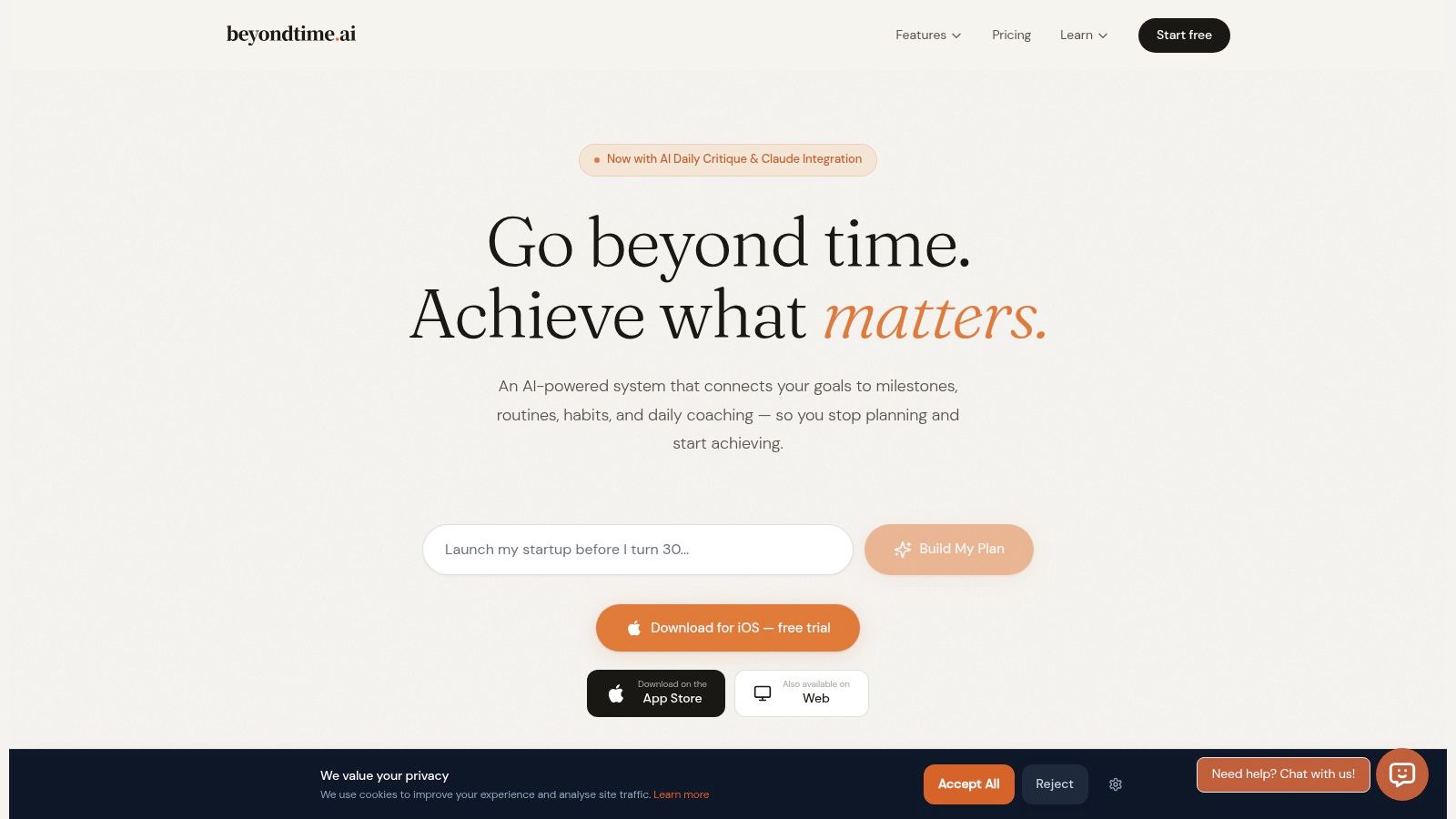
That distinction matters. A point solution can be excellent at one job, like habit logging or streak tracking, but it still leaves you to translate goals into weekly actions and calendar time. Beyond Time is designed for the full chain from objective to milestone to daily execution, which reduces the number of decisions you have to make by hand. If you want the habit side of that setup to work better, this guide on how to build better habits pairs well with the app's structure.
Why it works as a system
The strongest part of Beyond Time is the link between strategy and the calendar. The iOS app includes 15-minute time tracking and planned-versus-actual analysis, which is where weak plans usually get exposed. A goal can look sensible in a weekly review and still fail because the work never found a real place in the day.
The morning AI Critique is useful for the same reason. It narrows attention to the single highest-impact action instead of dumping a long list of prompts on you. That is a better design choice than many personal development apps make. Analysts reviewing mental health and behavior-change apps found repeated problems with app fit, motivation, context, and knowing when more support is needed (clinical review on app fit and motivation challenges). In practice, fewer choices and clearer next actions usually beat feature depth.
Practical rule: If an app adds decisions every morning, it adds friction. If it reduces decisions and clarifies the next step, it is functioning like a system.
There is also a workflow advantage in its integrations. Beyond Time connects goal data with Claude, ChatGPT, Cursor, Windsurf, and other MCP-compatible tools. That keeps your planning system close to the software where real work happens, which is a meaningful difference from apps that become isolated dashboards you stop checking.
Best fit and trade-offs
Beyond Time fits people running multi-step goals through messy schedules. Founders, managers, students, and creators are the obvious examples, but the broader pattern is simple. It works well for anyone who needs one connected structure instead of separate apps for planning, habits, and review.
The trade-offs are clear:
- Best strength: It ties goals to routines and actual time use, so progress is visible in practice, not just in theory.
- Biggest limitation: The richer experience is iOS-first. If cross-platform parity matters, that constraint will matter too.
- Important caution: The app uses personal context and AI memory. Anyone with strict privacy requirements should review data handling before adding sensitive information.
The free web app covers goals, milestones, and basic AI suggestions. The deeper mobile experience is on iOS with a two-week free trial, then Pro at $4.99 per month or $29.99 per year.
If basic trackers feel fragmented, this is the clearest example in the list of a system-first app rather than a single-purpose tool.
2. Strides
Strides is what I recommend when someone already knows their goals and doesn't need coaching, but does need clean measurement. It's one of the better examples of a specialized tracker done well. You get multiple tracker types, solid visual feedback, and enough structure to run personal OKRs without feeling boxed in.
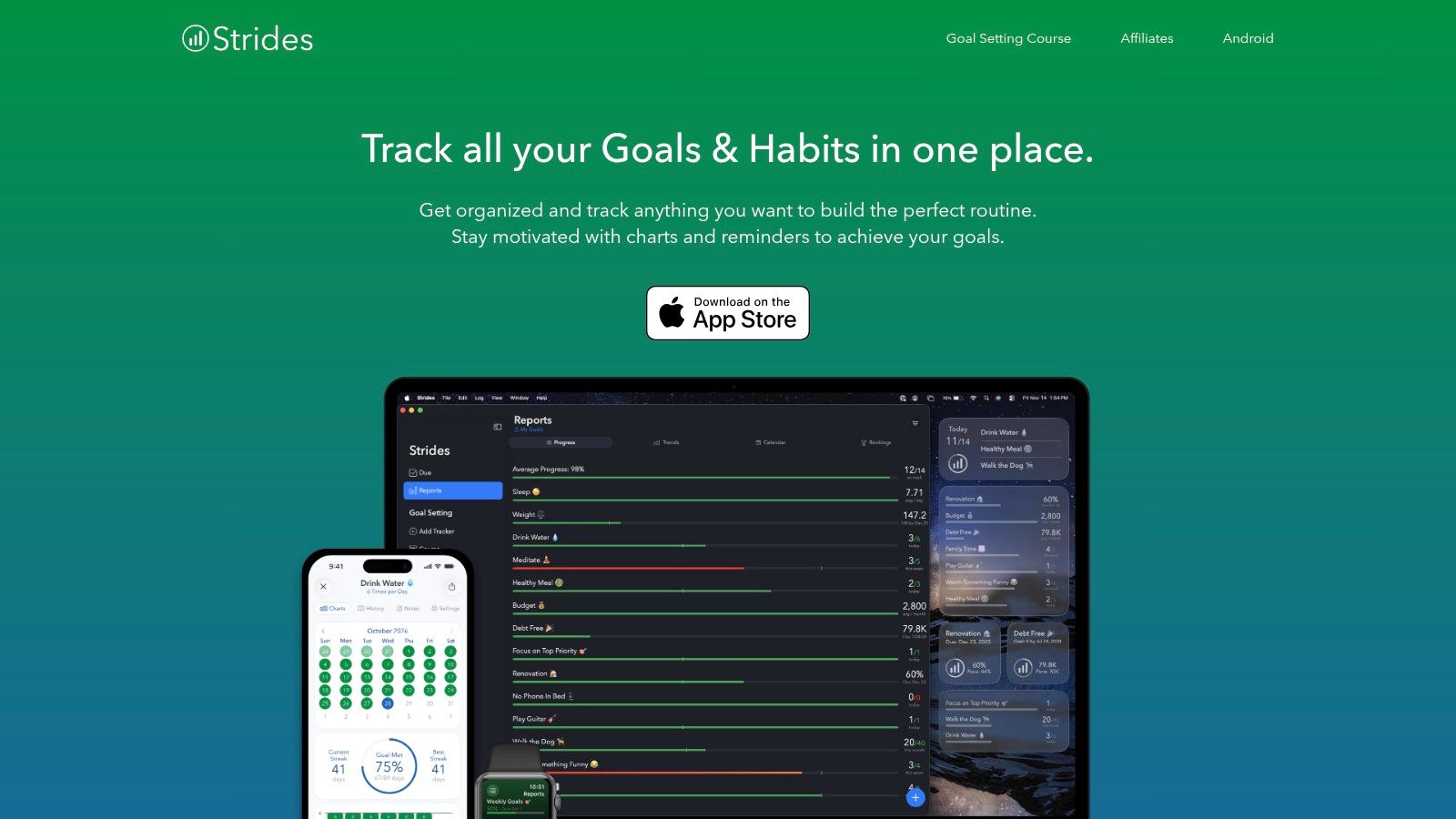
The practical appeal is flexibility. Habit, Target, Average, and Milestone trackers cover most self-management needs, whether you're trying to read daily, cap caffeine, hit study hours, or finish a project in stages. If you care about reviewing planned versus actual progress, Strides makes that visual enough to catch drift early. If you want more ideas on that style of review, this guide to progress tracking software is worth pairing with it.
Where Strides shines
Strides is strongest inside the Apple ecosystem. iCloud sync, Apple Watch support, tagging, filters, reminders, and CSV export make it useful for people who like a measurable, orderly setup without turning life into a spreadsheet.
Where it falls short is equally clear. It doesn't coach. It doesn't provide strong accountability beyond reminders. And because it's iOS and macOS only, it's a poor fit for mixed-device users.
Strides is a measuring instrument, not a behavior engine. That's a compliment, not a criticism.
Use it when you already know what to do and need a reliable place to track whether you're doing it.
3. Habitify
Habitify fits people who want a clean habit app that works almost everywhere. That sounds basic, but cross-platform consistency is one of the first things busy users notice when an app fails them. If a habit system only works on one device, adherence usually gets worse the moment the day gets messy.
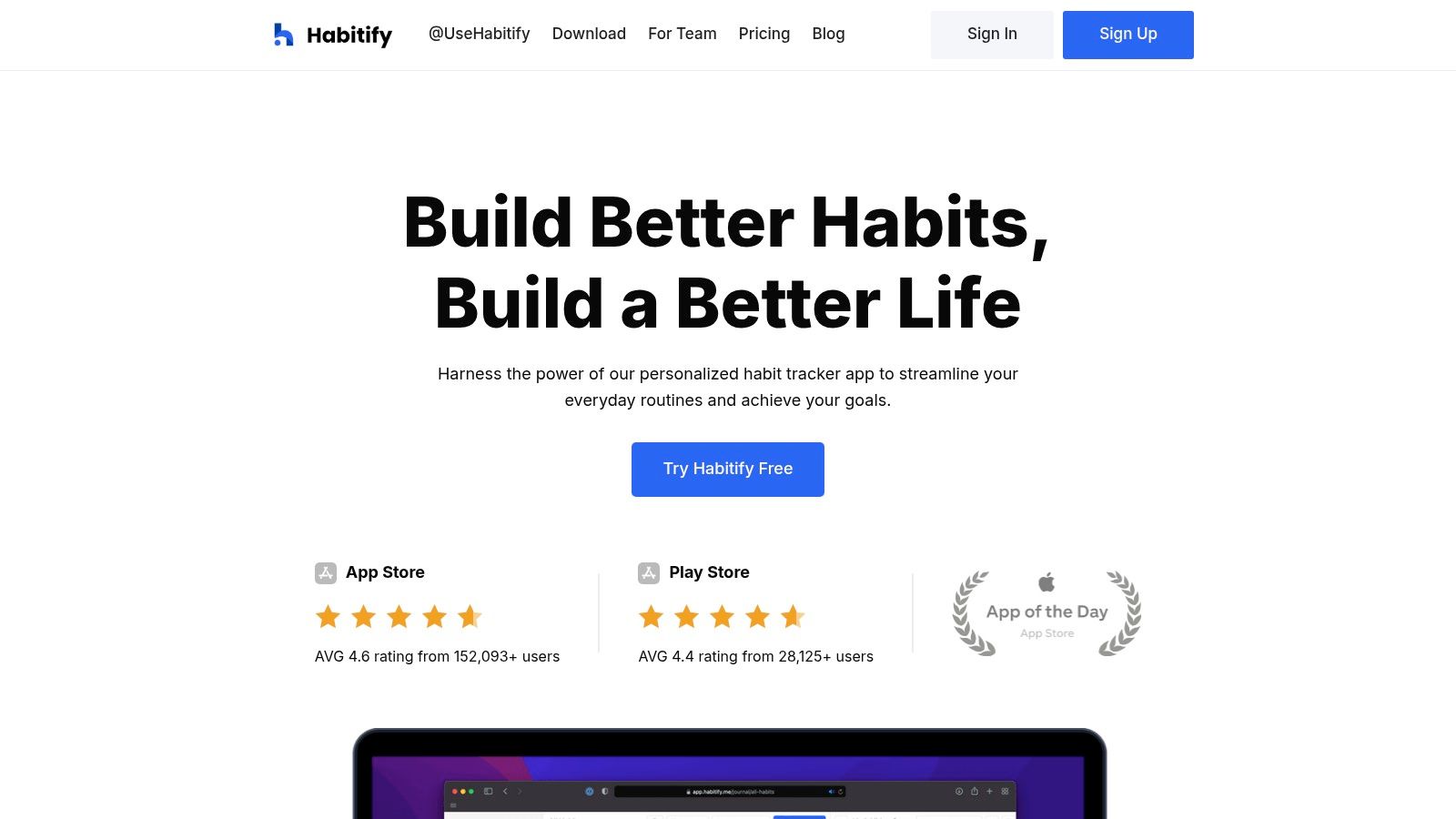
Habitify runs on iOS, Android, Mac, and web, with syncing that makes it easier to keep routines visible. It also supports Apple Health, Google integrations, reminders, calendar views, and paid-tier automation through Zapier and IFTTT. For professionals who want straightforward routine support, that's often enough. The app doesn't try to become your life philosophy. It helps you repeat the basics.
Best use case
Habitify works best for maintenance habits, especially when friction is the enemy. Think sleep routine, water intake, walks, language practice, stretching, or reading. It's less compelling for people who need social accountability or deep behavior coaching.
Its biggest strength is that it gets out of the way. Its biggest weakness is the same. You won't find much community pressure or strong strategic guidance here. If your habits keep failing because they're poorly designed, not poorly tracked, pair it with stronger thinking around routine design, such as this article on how to build better habits.
Use Habitify when you want consistency across devices and don't need the app to talk you into doing the work.
4. Streaks
Streaks is a low-friction Apple-only habit tracker with a simple promise: make logging so easy that you'll keep using it. That's more valuable than feature depth for a lot of people.
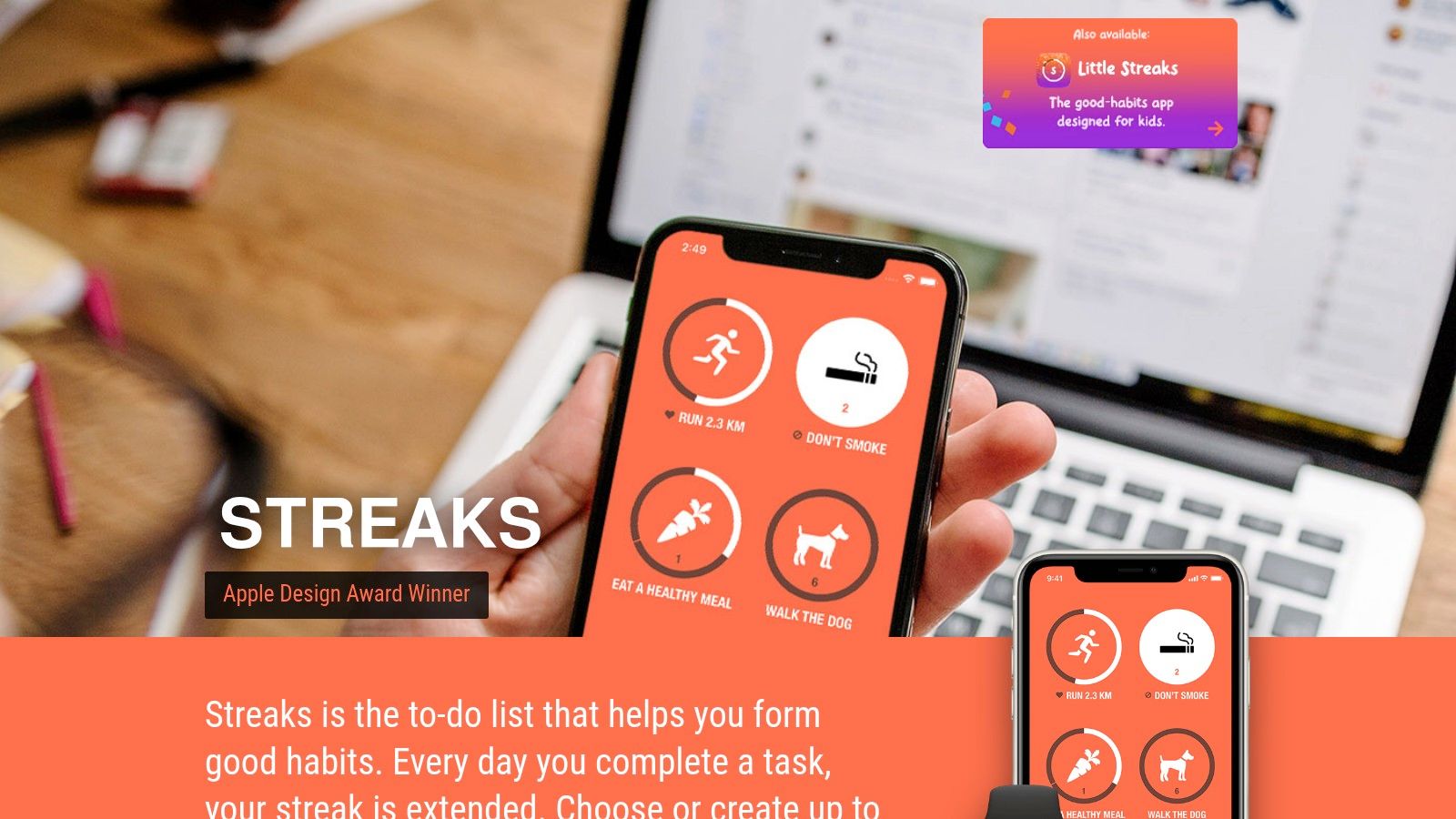
Its design is polished, fast, and closely tied into Apple's ecosystem. You can track up to 24 tasks, use Health app auto-completions for selected behaviors, and log quickly through Siri Shortcuts, widgets, Apple Watch, and other Apple devices. That matters because many personal development apps lose users at the point of entry. If recording the habit feels annoying, the habit system weakens.
Why people stick with it
The one-time purchase model is part of the appeal. Many users don't want another subscription just to track daily actions. Streaks gives them a focused tool with less psychological clutter.
The trade-off is obvious. Streaks is not a planning app, coaching app, or accountability network. It's a polished repetition tool. If your main issue is remembering to complete a few health or routine behaviors, it's excellent. If your issue is deciding which behaviors matter in the first place, look elsewhere.
This is one of the cleanest examples of a point solution that knows its limits.
5. Habitica
Habitica turns self-management into a role-playing game. Tasks, habits, and dailies become part of a game loop with avatars, gear, quests, parties, guilds, and community challenges. That can sound gimmicky until you've seen how well it works for people who hate sterile productivity tools.
Habitica is especially effective for users who respond to visible progress and social play. Students do well with it. Small teams and accountability groups often do too. If checking off a task in a normal app feels dead, earning progress in a shared quest can make the same behavior feel more alive.
When gamification helps
Gamification helps when the task itself is boring but the completion signal matters. Habitica gives that signal personality. The free core app is generous enough to try the system properly, and the community side gives it energy that many personal development apps lack.
The downside is taste. Some people immediately bounce off the visual layer. Others over-engage with the game and under-engage with real planning. Habitica also won't replace a serious project management or strategic goal system.
If you avoid plain trackers because they feel clinical, Habitica may unlock consistency by changing the emotional texture of the work.
Use it for motivation and accountability, not for long-range planning.
6. Beeminder
Beeminder is for people who need consequences, not encouragement. Its core mechanic is unusually direct. You commit to staying above a “bright red line,” often with autodata, and if you derail, you pay.
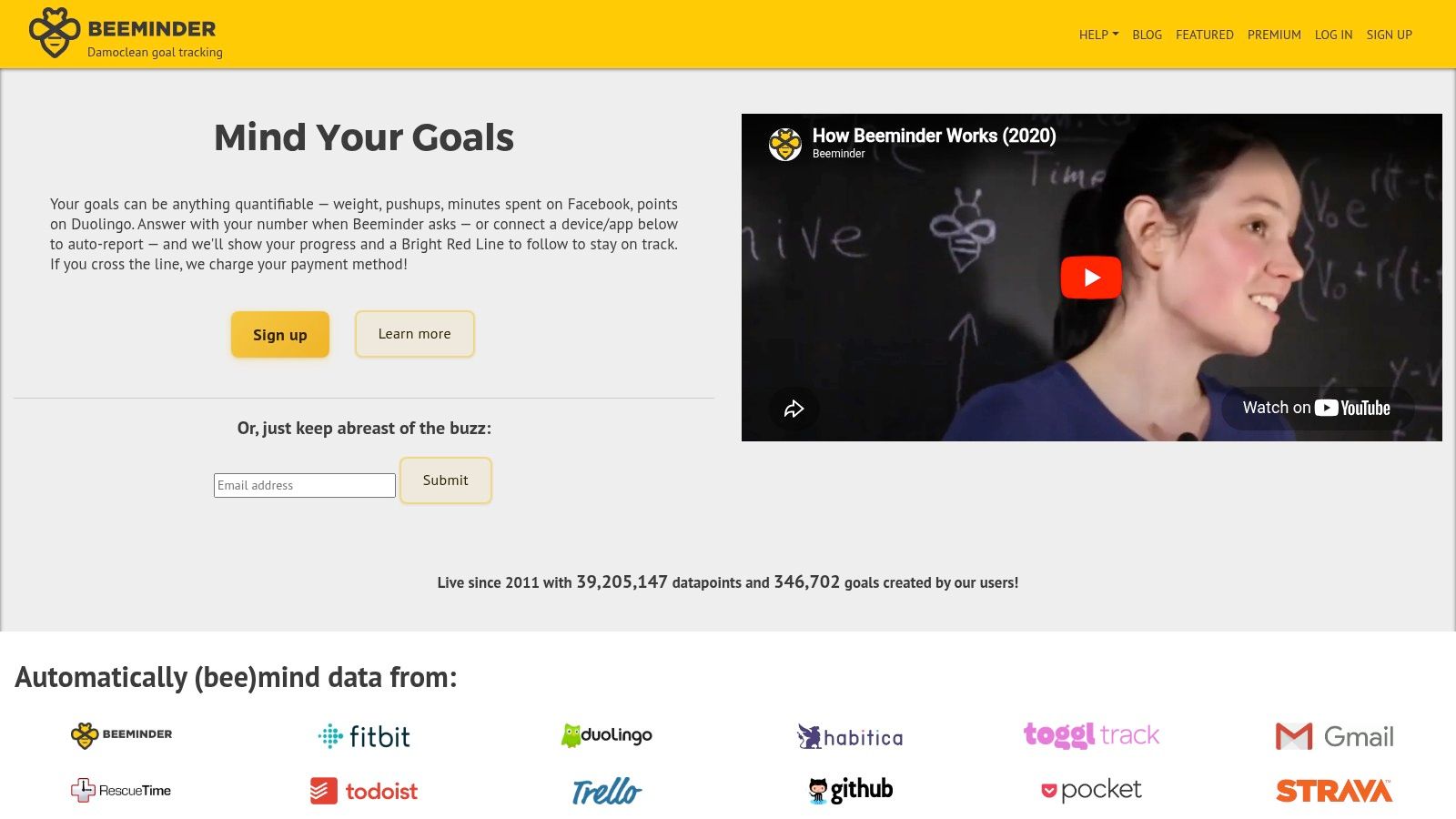
This is one of the few personal development apps that can force seriousness fast. It supports web, iOS, Android, API access, and many integrations. That makes it useful for measurable goals like exercise frequency, writing output, focused work time, weight management, or inbox control. If you want a broader look at this category, this roundup of goal-setting apps gives more context.
Who should use it
Beeminder fits users who respond to external pressure and don't resent the mechanism. It also helps people who trust data more than mood. The app can pull behavior from connected services, which reduces the loophole of “I forgot to log it.”
It is not for everyone. Financial stakes can create productive urgency, but they can also create stress. There's a learning curve around tuning goals so they're demanding without becoming self-sabotaging. If you tend to rebel against rigid systems, Beeminder may become another thing to dodge.
For the right user, though, it's one of the most behaviorally honest tools in the entire category.
7. stickK
stickK uses a simpler accountability model than Beeminder. You set a commitment, put money on the line, choose a referee if needed, and decide where forfeited money goes if you fail. In practice, that makes stickK feel more social and less data-heavy.
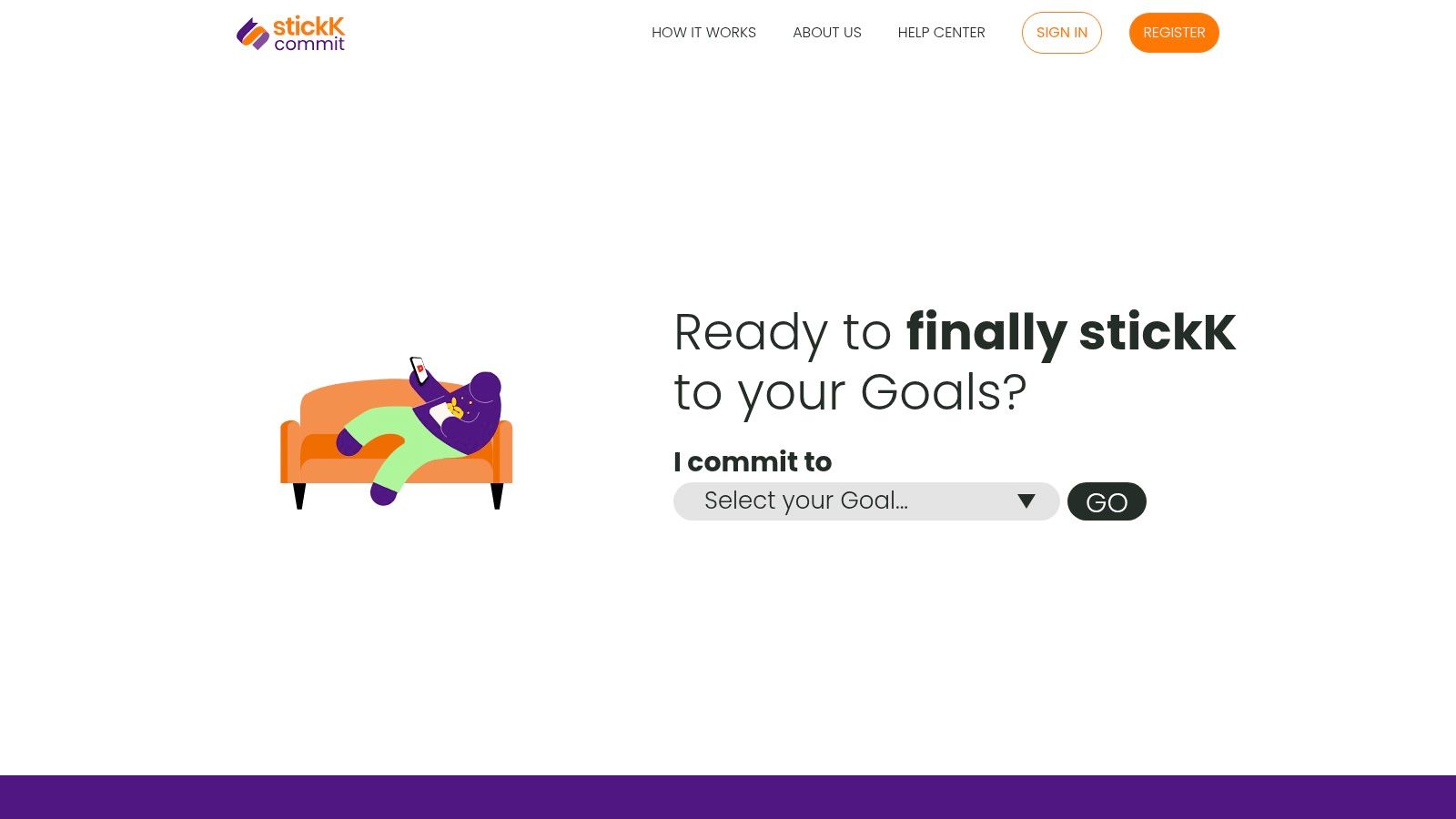
This works well for straightforward goals that need verification from another person. Weight loss, study sprints, workout consistency, deep work blocks, and short-term behavior resets are good examples. A referee adds a human checkpoint that many users find harder to rationalize away than an app notification.
Best for simple commitments
stickK is strongest when the goal is clear and the proof is easy. It doesn't offer rich analytics, polished habit dashboards, or detailed planning support. That's fine. It isn't trying to.
Its weakness is that it can't manage complexity well. If your real struggle is breaking a goal into milestones, building supporting habits, and adapting as life changes, stickK won't do that. But if you already know the target and need social pressure to follow through, it's effective in a very old-fashioned way.
This is a pressure tool, not a system. Use it accordingly.
8. Fabulous
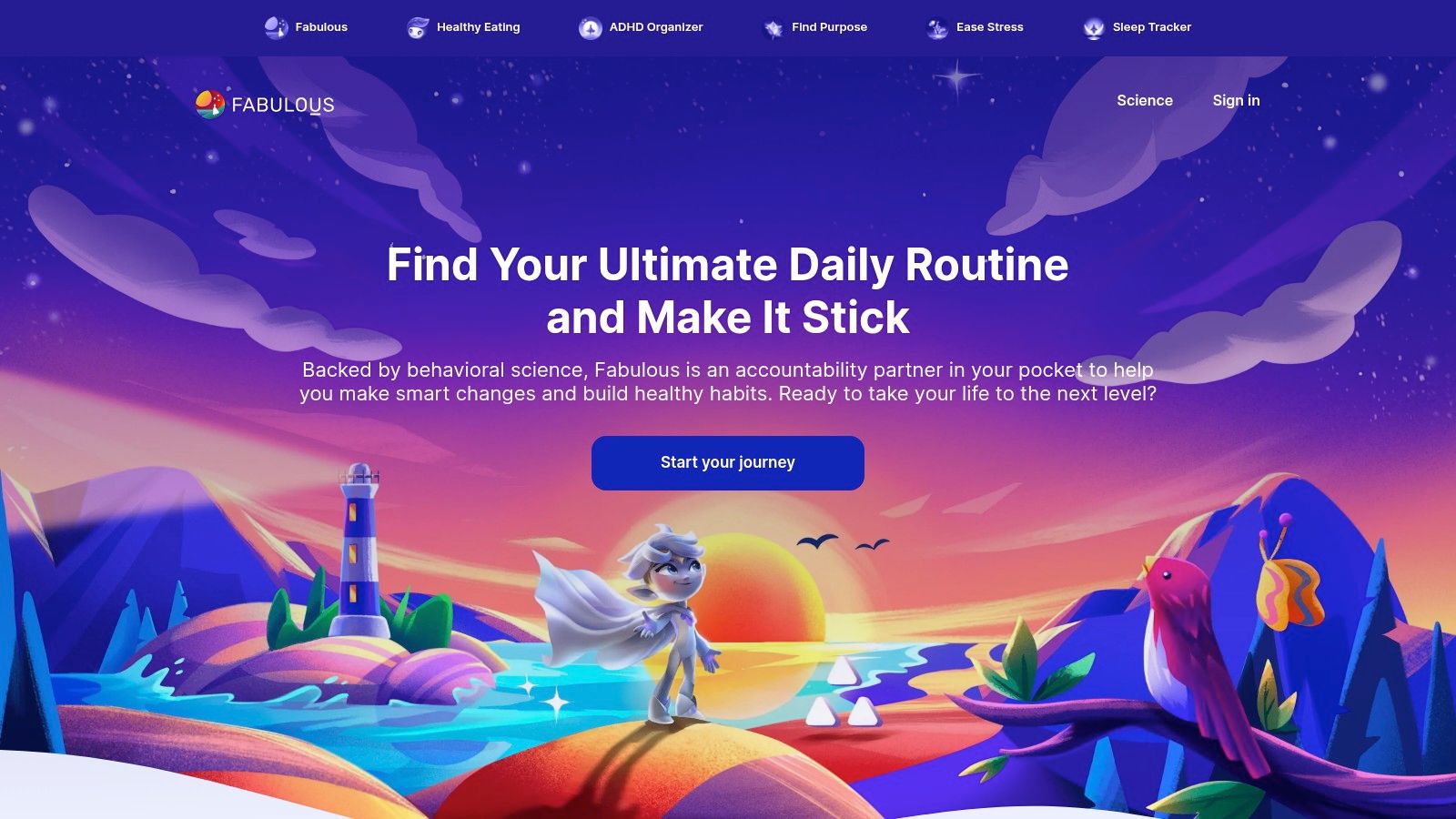
Fabulous is one of the better choices for people who don't want to design their own habit system. It provides guided journeys, routines, reminders, and ritual-based flows aimed at helping users build foundational behaviors around sleep, focus, energy, and well-being.
That prescriptive style is exactly why some people love it and others leave it. Beginners often need fewer choices, not more. Fabulous gives them a path they can follow without constant self-design. More experienced users may feel constrained by that same structure.
Where structure beats flexibility
Fabulous is useful when your routines are weak and your day lacks anchors. The app is especially good at encouraging keystone habits, the kind that stabilize the rest of the day. It feels more like a guided program than a tracker.
Its limits show up when customization matters. If you want open-ended control, detailed analytics, or close integration with work goals, other tools are stronger. Some users have also criticized pricing and cancellation flows, which makes it worth reviewing the terms carefully before subscribing.
Choose Fabulous if you want guidance and momentum more than control.
9. Coach.me
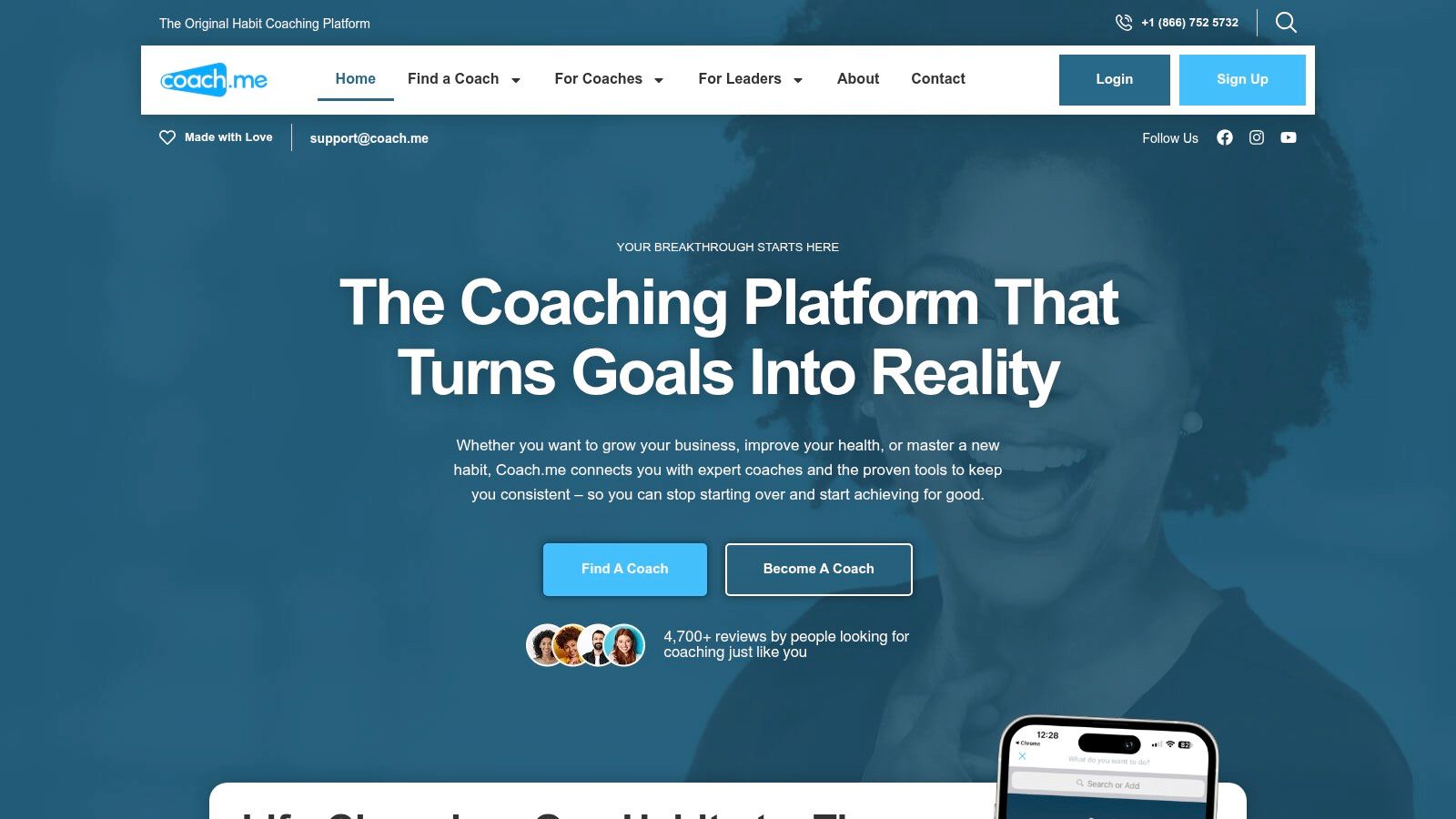
Coach.me sits in a different category because the app is only part of the value. Its differentiator is access to human coaching for habits and leadership, plus a free self-coaching and community layer.
Not every personal development problem is a tracking problem. Some are interpretation problems. You know what you should do, but you keep negotiating with yourself, avoiding friction, or failing to adapt the plan when life changes. Human guidance can help when apps alone stop being enough.
When human accountability wins
Coach.me is best for users who want direct accountability and feedback. Private chat coaching creates a stronger sense of commitment than a streak counter for many people, and leadership coaching can be useful for professionals whose growth goals are tied to communication, management, or decision-making.
The catch is fit. Coaching quality depends on the coach and on the user's willingness to engage. It also tends to cost more than a normal app subscription. If you only need a clean habit tracker, Coach.me is overkill. If you keep failing with self-serve tools, it can be the right escalation path.
That human layer is what makes this app worth considering in a serious system.
10. Headspace
Headspace fits the support side of a personal operating system. It helps with attention, stress, sleep, and emotional regulation. It does not handle planning, goal structure, or execution, and that boundary is useful to understand before you pay for it.
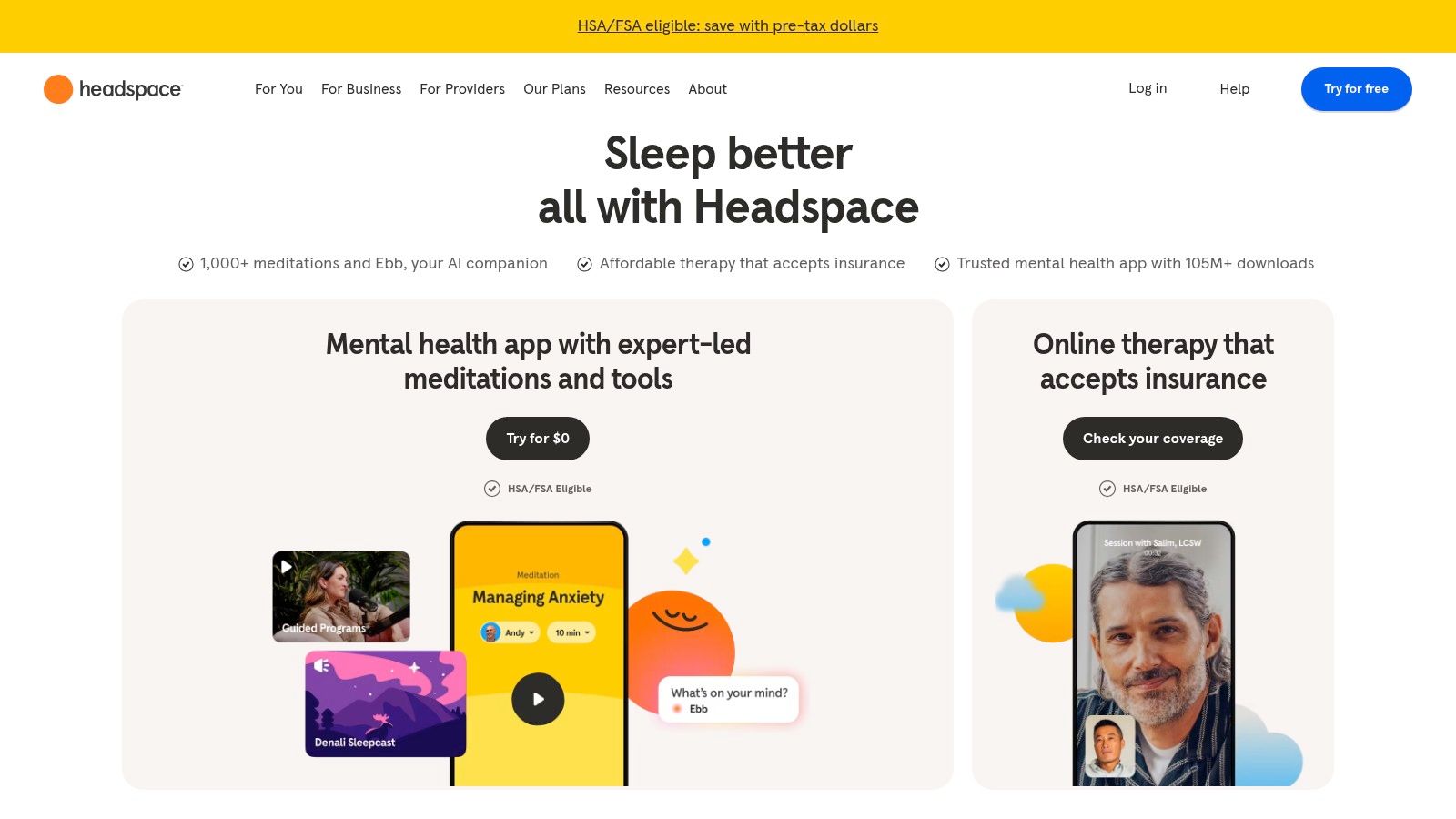
The app is well suited to beginners because the entry point is simple. Guided meditations, focus sessions, sleep content, short SOS exercises, and daily recommendations make it easy to build a repeatable routine without much setup. For users who are overloaded or mentally scattered, that low-friction start matters more than a long feature list.
Headspace works best as a layer inside a broader system. Use it before a planning session, after a stressful meeting, or to conclude your workday cleanly. In practice, that means pairing it with a tool that tracks goals, habits, or tasks. Headspace supports better execution indirectly by improving the state you bring into your work.
That trade-off is the whole point.
If you want one app to tell you what to do, when to do it, and whether you followed through, Headspace will feel limited. If your system already handles action and measurement, Headspace can reduce the friction that causes that system to break under stress.
Use Headspace as your regulation layer. Let another app handle commitment, tracking, and review.
Top 10 Personal Development Apps, Feature Comparison
| Product | Core features ✨ | UX / Quality ★ | Pricing & Value 💰 | Target audience 👥 | Standout / USP 🏆 |
|---|---|---|---|---|---|
| Tribble Software (Beyond Time) 🏆 | ✨ AI-driven OKR → sequenced milestones, context-aware routines, 15‑min time tracking, daily AI Critique | ★★★★★ AI coaching + measurable planned‑vs‑actual tracking | 💰 Free web; iOS Pro $4.99/mo or $29.99/yr (2‑wk trial) | 👥 Founders, professionals, students, self‑improvers | 🏆 Connected loop: goals→habits→time tracking; GPT/Claude integrations |
| Strides | ✨ Four tracker types (Habit/Target/Average/Milestone), rich graphs, iCloud sync | ★★★★ Clear visuals; highly customizable | 💰 Free basic; Strides Plus subscription for power users | 👥 Apple users who want granular OKR‑style tracking | Visual planned‑vs‑actual dashboards for personal OKRs |
| Habitify | ✨ Cross‑platform sync, calendar views, Health integrations, automation hooks | ★★★★ Smooth onboarding; solid free plan | 💰 Free tier; Premium for advanced analytics & automations | 👥 Busy pros needing cross‑device habit syncing | Calendar analytics + Zapier/IFTTT integrations |
| Streaks | ✨ Apple‑only, Health auto‑completions, Siri Shortcuts, widgets | ★★★★ Polished, low‑friction logging | 💰 One‑time purchase (no subscription) | 👥 Apple ecosystem users focused on health/fitness | One‑time buy + deep Apple Health integration |
| Habitica | ✨ Gamified tasks (RPG), parties, quests, challenges | ★★★ Engaging for game‑minded users | 💰 Free core; optional cosmetics/subscriptions | 👥 Students, teams, users motivated by gamification | Social RPG mechanics to drive habit adherence |
| Beeminder | ✨ Commitment contracts with autodata integrations and configurable pledges | ★★★ Effective but steeper tuning curve | 💰 Free basic; paid tiers for advanced features + financial stakes | 👥 Users who respond to economic incentives | Financial‑penalty mechanism to enforce consistency |
| stickK | ✨ Escrowed stakes, referee verification, choice of beneficiary | ★★★ Simple, socially verified commitments | 💰 Platform fees on forfeited stakes | 👥 People wanting externally enforced commitments | Referee + charity/anti‑charity options for social accountability |
| Fabulous | ✨ Multi‑week journeys, routine stacking, coaching‑style content | ★★★★ Highly structured & motivational | 💰 Subscription; reported pricing/cancellation concerns | 👥 Beginners seeking guided habit programs | Science‑based, prescriptive habit journeys |
| Coach.me | ✨ One‑on‑one habit & leadership coaching, community check‑ins | ★★★★ Human coaching can accelerate results | 💰 Free self‑coaching; paid coaching varies by coach | 👥 Professionals wanting human accountability | Access to vetted coaches + leadership programs |
| Headspace | ✨ Guided meditations, sleep & focus courses, SOS sessions | ★★★★ Polished content library for daily practice | 💰 Subscription; employer/plan access available | 👥 Users seeking mindfulness to support productivity | Extensive meditation & stress‑reduction content |
Your System for Action Stop Planning, Start Doing
The perfect app doesn't exist. The better question is which combination gives you the fewest failure points. That's the systems-versus-tools lens most buyers miss when choosing personal development apps.
A few market signals support that shift toward digital systems. One estimate places the global personal development market at USD 51.59 billion in 2025, projected to reach USD 76.871 billion by 2033, with e-platforms holding 38.4% of global share in 2024. Another estimate places the market at USD 53.24 billion in 2025 and projects USD 90.86 billion by 2035, with North America contributing more than 35% of revenue in 2025 and Asia-Pacific expected to grow fastest over the forecast period, as noted earlier. Digital delivery is already central, not optional.
That doesn't mean more apps will solve more problems. Mainstream coverage still tends to organize the category around broad buckets like self-awareness, well-being, and goal tools, but it says much less about long-term adherence, workflow integration, or what busy users can sustain. That gap matters because motivation management remains a recurring challenge in the literature and in practice, as discussed in this overview of personal development tools and retention challenges. More prompts and more features often create more maintenance, not more progress.
A simple way to build your system:
- Choose one system app: If your main problem is translating goals into daily execution, start with Beyond Time.
- Add one point solution only if needed: Use Strides, Habitify, or Streaks when you need cleaner habit measurement than an all-in-one system provides.
- Use pressure carefully: Add Beeminder or stickK only when accountability, not clarity, is your bottleneck.
- Layer in skill-building or regulation: Use Fabulous for guided routines, Coach.me for human support, or Headspace for focus and recovery.
A final note on outcomes. Independent research cited in the wellness app market analysis found that app-based interventions improved well-being outcomes by 23% versus waitlist controls in a 2024 meta-analysis published in JMIR mHealth and uHealth. That doesn't mean every app helps every user. It does mean this category can produce real value when the tool matches the job.
Start small. Pick one app and one core goal for the next month. Tie app use to an existing routine, such as morning coffee or the end of your workday. Review progress once a week for a short, honest reset.
The people who make progress aren't the ones with the most apps installed. They're the ones whose tools reinforce the same direction.
If you want one place to connect long-term goals, AI-generated milestones, habits, routines, and daily execution, Tribble Software Private Limited's Beyond Time is a strong place to start. It's especially useful if you're tired of juggling separate trackers and want a practical system that helps you decide what to do today, not just what you hope to achieve someday.
Put this into practice
Free tools that match this article.
Goal Setting Worksheet
Turn a vague goal into milestones, habits, blockers, and a weekly review plan.
Try Goal WorksheetGoal SettingSMART Goal Validator
Instantly validate your goals against the SMART framework and get actionable improvement suggestions.
Try SMART ValidatorGoal SettingAI Milestone Generator
Turn your biggest goals into an actionable step-by-step plan in seconds with AI.
Try Milestone GeneratorGoal SettingOKR Generator
Transform any aspiration into a structured OKR with measurable key results in seconds.
Try OKR GeneratorKeep exploring this topic
Goal setting guide
Start with the fundamentals of setting goals that turn into action.
Goal frameworks compared
Choose between SMART goals, OKRs, BHAGs, and 12-week goals.
Best goal tracking apps
Compare tools for goals, habits, and progress tracking.
Best habit tracker apps
Compare habit apps by use case, depth, and daily workflow.
Related Articles
10 Best Goal Setting Apps for 2026: A Full Review
Find the best goal setting apps for 2026. Our guide compares 10 top tools for OKRs, habits, and AI-powered planning to help you finally achieve your goals.
Goal Planning Tools: Achieve Your 2026 Targets
Discover the best goal planning tools for founders, teams, & individuals. Our 2026 review covers OKR, habit trackers, & AI systems to hit targets.
10 Best Apps for Daily Routine in 2026
Find the best apps for daily routine to organize your life. We review Todoist, Structured, Beyond Time, and more to boost your productivity in 2026.
How to Build Better Habits: A Science-Backed Playbook
Learn how to build better habits that last. Our guide provides a science-backed framework, tracking templates, and troubleshooting for real-world results.
10 Personal Development Goal Examples for 2026
Discover 10 powerful personal development goal examples. Get SMART templates for career, finance, and health to start achieving your biggest goals today.
How to Track Multiple Goals Without Getting Overwhelmed
Learn a proven system for managing multiple goals simultaneously without losing focus or burning out. Practical frameworks for tracking 3-5 goals at once.