10 Actionable Affirmations for Success in 2026
Unlock your potential with these 10 powerful affirmations for success. Learn how to integrate them into your goal-setting workflow for radical accountability.
Beyond Wishful Thinking: Affirmations as a Success System
Most advice about affirmations for success gets the core idea wrong. It treats them like verbal lucky charms. Say the right sentence often enough, and success supposedly appears. That's why so many smart people dismiss affirmations as fluff, and I understand the skepticism.
What works is different. An affirmation becomes useful when it acts like a programming script for behavior. It names an identity, points attention at a concrete action, and gets reinforced by evidence from your day. A major 2025 meta-analysis synthesized 129 studies with nearly 18,000 participants and found that self-affirmations improved overall well-being, increased feelings of belonging and connection, enhanced positive self-perception, and reduced anxiety and negative mood, which gives this practice a stronger foundation than is commonly assumed (2025 self-affirmation meta-analysis summary).
That still doesn't mean every affirmation helps. Some feel fake. Some backfire. Some become another way to avoid hard work. The useful version ties mindset to execution. It belongs inside a system with milestones, routines, tracking, and review. If confidence is something you struggle with while pursuing ambitious goals, it also helps to understand how to overcome imposter syndrome instead of masking it with empty positivity.
These 10 affirmations are built for that more practical model. Each one connects to a modern goal-achievement workflow, especially an AI-supported system like Beyond Time, where your words, calendar, routines, and feedback loop can reinforce each other.
Table of Contents
- 1. I am executing my milestone today with focus and intention
- 2. My patterns reveal what works; I build on what succeeds
- 3. My daily routine is the infrastructure of my success
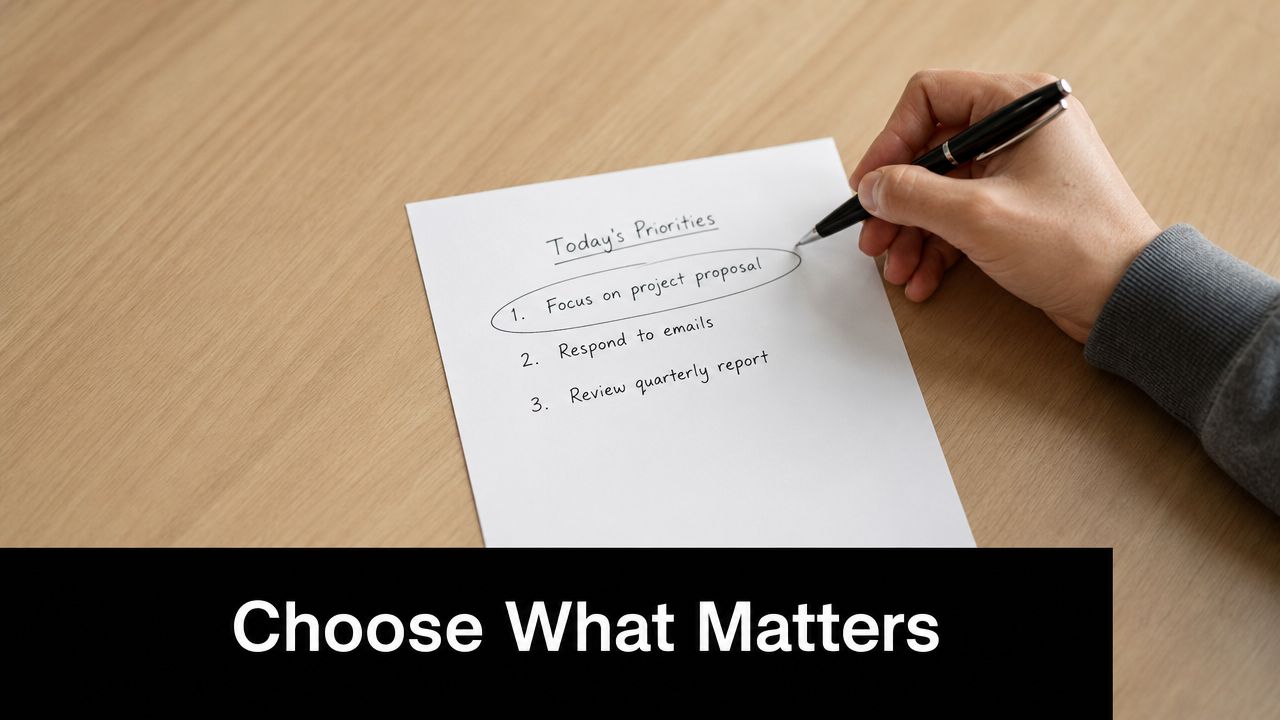
- 4. I choose what matters most and eliminate the rest
- 5. Real accountability comes from real data, not excuses
- 6. My goals live in my daily work; they are not separate
- 7. I measure momentum, not just outcomes
- 8. I am the architect of my own advancement
- 9. Today's discipline is tomorrow's freedom
- 10. I collaborate with AI to amplify my judgment, not replace it
- 10-Point Affirmations Comparison
- Integrate, Affirm, Achieve Your Daily Success Loop
1. I am executing my milestone today with focus and intention
This is one of the few affirmations for success that immediately passes the reality test. It doesn't claim you've already won. It says you're acting now, on something specific, with deliberate attention.

A founder can say this before a 15-minute deep work block on investor outreach. A product manager can say it before writing the spec that's been sitting untouched all week. A student can say it before starting the hardest problem set, not the easiest reading assignment.
Say it before the work starts
The key is timing. Don't repeat this while brushing your teeth and forget it by noon. Use it in the minute before you open the actual task tied to your current milestone.
Modern guidance on affirmations emphasizes that the useful versions are present-tense, realistic, specific, and paired with action, not just repeated in the abstract (evidence-based guidance on effective affirmations). That's exactly why this statement works better than “I am wildly successful.”
Practical rule: Attach the affirmation to a start trigger. Calendar alert, timer start, or app check-in. No trigger, no habit.
If you use Beyond Time, connect the phrase to the milestone you're actively moving. Review a few examples of milestones in project management if your goals still feel too vague to execute. Then log the session when you finish. The completion record matters because it turns the affirmation from a hopeful statement into something you can prove.
2. My patterns reveal what works; I build on what succeeds
Success isn't usually hiding in a secret technique. It's often sitting inside your own repeated good days. This affirmation shifts your attention from self-criticism to pattern detection.

A founder might notice that strategic thinking happens best before meetings begin. A writer might realize their best output comes after a walk and before checking messages. A student might learn that two shorter review sessions beat one long, drained session at night.
Turn reflection into pattern recognition
The wrong way to use this affirmation is to make it philosophical. The right way is to ask, “What conditions were present when I did strong work?”
Beyond Time's value here isn't inspiration. It's memory. When your tool stores routines, tracks time, and compares plan versus reality, you stop relying on mood and start seeing patterns you can repeat. That's where AI can help. Not by “motivating” you, but by surfacing consistent conditions tied to good execution.
A quick weekly review works well:
- Identify one strong day: Look for the day when you protected focus and followed through.
- Name the conditions: Note time of day, environment, task type, and interruptions.
- Repeat one factor: Don't overhaul everything. Recreate one useful condition this week.
Later in the week, use this video as a prompt to reflect on what your working patterns are telling you:
The phrase becomes true when you act on the evidence. If mornings are your best strategic hours, stop donating them to reactive communication.
3. My daily routine is the infrastructure of my success
A lot of people want breakthrough outcomes with improvised days. That rarely holds up. This affirmation works because it treats routine as structure, not restriction.
Small, repeated actions carry more weight than dramatic bursts of motivation. If your goal is to publish research, build a business, improve health, or finish a thesis, the routine is the delivery mechanism. The goal doesn't move without it.
Build fewer routines, but make them load-bearing
Individuals often build too many habits at once. Then they fail at all of them and conclude they lack discipline. That's not a discipline problem. It's a systems design problem.
Start with two or three routines that directly support real milestones. A founder might build a morning planning ritual, a protected sales block, and an evening review. A student might create a daily recall practice, a scheduled office-hours question list, and a weekly revision session.
Routine should remove decisions, not create more of them.
If you want a better operating model for your workday, this guide on how to improve work productivity is a useful companion. In Beyond Time, routines become more powerful when they're explicitly linked to milestones instead of sitting in a separate habit tracker. That connection changes the emotional feel of repetition. You're not just “being consistent.” You're building the infrastructure that carries meaningful work forward.
4. I choose what matters most and eliminate the rest
This affirmation is blunt, and it should be. Most stalled progress comes from divided attention, not lack of ambition.
A founder can spend all day answering messages and still avoid the one conversation that would clarify product demand. A manager can clear admin tasks and still dodge the strategic decision the team is waiting on. A student can color-code notes and never attack the concept they do not understand.
Elimination is part of achievement

The popular version of productivity says success comes from fitting more in. In practice, real progress often comes from cutting aggressively. If your AI critique surfaces one highest-impact focus for the day, trust it enough to protect that block before the rest of the day starts filling up.
Try a simple daily filter:
- Must move a milestone: If the task doesn't affect a live milestone, question it.
- Can be delayed: If the consequence of waiting is low, move it.
- Can be delegated or ignored: If someone else can do it, or no one will notice, drop it.
Your attention budget is limited. Spend it where the return is compounding.
This affirmation gets stronger every time you can point to something you intentionally did not do. Elimination is not laziness. It's strategic refusal.
5. Real accountability comes from real data, not excuses
Some affirmations are soft. This one isn't. It asks for honesty.
People routinely overestimate focused time, underestimate task duration, and tell themselves flattering stories about effort. That's why time tracking matters when it's used for learning, not punishment. Beyond Time's 15-minute tracking model is useful because it's granular enough to reveal what your day became.
Use tracking to remove self-deception
A founder plans three hours for product work and discovers meetings swallowed the morning. A consultant blocks deep work but sees constant switching in the actual record. A student believes they studied all evening, then finds that only a fraction of the night went to active problem-solving.
The lesson isn't guilt. It's calibration.
Use this affirmation before weekly review and ask three questions:
- What did I plan that didn't happen?
- What kept interrupting my intended work?
- What should change next week because of this data?
A useful side note here is market demand. The broader confirmations and affirmations platform category was valued at USD 1.23 billion in 2024, with North America accounting for about 38% of global revenue and Asia Pacific projected to grow at a 19.2% CAGR through 2033, which suggests this space is already commercialized and still expanding (affirmations platform market outlook). That matters because it shows people want support tools. But demand alone doesn't create results. Honest data does.
6. My goals live in my daily work; they are not separate
This affirmation fixes a common split. Many people keep goals in one place and daily life in another. The goals live in a document. The day gets filled by whatever is loudest.
That arrangement almost always leads to drift. If your calendar, routines, and task choices don't carry the goal, the goal becomes decorative.
Collapse the gap between planning and doing
A founder with a customer acquisition goal should see it in daily outreach, follow-up, and research blocks. A professional who wants to become known for expertise should see that goal reflected in reading, note-making, speaking, and publishing. A student aiming for mastery should see the target in the actual sequence of practice sessions, not just in a semester planner.
This principle shows up outside work too. The same reason people succeed with structured health plans is that they embed a goal inside recurring actions. That's why frameworks for setting fitness goals often work better when they connect the target to weekly behavior.
If a goal doesn't appear in your normal Tuesday, it probably won't appear in your future either.
In Beyond Time, milestone-to-routine linking is essential. It closes the loop. Your goal stops being something you visit during review sessions and becomes something your day is already carrying.
7. I measure momentum, not just outcomes
Outcome goals matter, but they're too slow to guide daily behavior. This affirmation helps because it gives you something visible to measure before the finish line arrives.
A founder can't control when every deal closes, but they can track customer conversations. A writer can't force a book to be finished today, but they can log pages or focused drafting sessions. A student can't instantly “master” a subject, but they can count problem sets completed, recall sessions done, and weak areas reviewed.
Leading indicators keep motivation alive
When people only measure outcomes, they often feel behind for long stretches. Then they quit. Momentum metrics fix that because they show whether the process is alive.
Use Beyond Time or any serious progress tracking software to define one or two leading indicators per milestone. Keep them simple enough to review at a glance. If a milestone is “launch portfolio site,” momentum indicators might be pages drafted, assets gathered, and outreach emails sent.
A short review works well at day's end:
- Did I move today? Name the concrete action completed.
- Did I stall for a reason or an excuse? Be honest.
- What creates momentum tomorrow? Pre-decide the first meaningful action.
The psychological payoff matters. Progress you can see is easier to repeat than progress you have to imagine.
8. I am the architect of my own advancement
This is an agency statement, and agency matters more than hype. You may not control the market, your boss, admissions decisions, or timing. But you do control the design of your personal system.
That's why this affirmation lands better than “success comes to me easily.” It places responsibility where it belongs. On your planning, your routines, your review process, and your willingness to iterate.
Design your system on purpose
A founder shouldn't copy another startup's workflow just because it sounds disciplined. A manager shouldn't inherit a planning style that fights their actual energy and obligations. A student shouldn't use someone else's study system if it looks productive but doesn't produce retention.
The best use of an AI-supported platform is personalization. Let the tool help you structure goals, sequence milestones, and notice trends. Then keep adjusting until the system fits your real life.
Try this quarterly reflection:
- What part of my system is working because it fits me?
- What part only exists because I copied it?
- What would I redesign if I started from scratch?
You don't need a perfect system. You need one that you can trust enough to keep using when life gets busy.
9. Today's discipline is tomorrow's freedom
This affirmation works because it reconnects effort with meaning. Discipline is easier to sustain when it clearly purchases something valuable.
Without that connection, routines feel like chores. With it, the same routine starts to feel like an investment. Sales calls create future choice. Skill practice creates career options. Studying now creates access later.
Make discipline emotionally meaningful
This isn't about glorifying grind. It's about seeing the long-term freedom hidden inside short-term constraints.
A founder who consistently works the pipeline earns more strategic breathing room later. A professional who builds technical depth creates future mobility. A student who protects study time opens doors that last longer than the semester itself.
There's also an important caution. Affirmations don't help everyone in the same way, and they can backfire when they feel false or disconnected from context. Research discussed in a Stanford-linked review found that an affirmation intervention did not uniformly replicate large performance gains and worked better in supportive environments, which is a useful reminder to make affirmations values-based, identity-consistent, and grounded in real next steps (review on when affirmation interventions help or fail).
When an affirmation feels fake, rewrite it until your nervous system can believe it and your schedule can support it.
So if “I am unstoppable” makes you roll your eyes, use something truer: “My discipline today expands my options later.” Believable language sticks.
10. I collaborate with AI to amplify my judgment, not replace it
This is the right affirmation for the current moment. AI can surface patterns, suggest priorities, and help you review execution. It should not become a substitute for thinking.
The strongest users of AI productivity tools aren't passive. They test recommendations against context. They compare suggestions with lived reality. They keep final authority.
Use AI as an input, not an authority
A founder might use AI pattern analysis to notice that sales activity drops on meeting-heavy days, then redesign the calendar. A professional might review a daily AI critique and accept the core priority while rejecting a recommendation that ignores stakeholder politics. A student might use AI-generated study suggestions but still adapt them to how they learn.
This balanced view matters because technology is becoming part of the mindset layer, not just the task layer. Beyond Time is one example of that shift. It connects goals, milestones, routines, time tracking, and AI reflection so your judgment has more useful evidence to work with.
Keep your relationship with AI clean:
- Ask for patterns: Let AI surface what you might miss.
- Check against context: Your life constraints still matter.
- Review outcomes: Notice when the recommendation helped and when it didn't.
The best affirmations for success don't pretend tools are magic. They help you use tools with more clarity, honesty, and ownership.
10-Point Affirmations Comparison
| Item | Implementation complexity 🔄 | Resource requirements ⚡ | Expected outcomes 📊 | Ideal use cases 💡 | Key advantages ⭐ |
|---|---|---|---|---|---|
| I am executing my milestone today with focus and intention | Low, simple present-tense commitment | Minimal, short, tracked work sessions + daily check-in | Immediate milestone progress; clear measurable execution | Start-of-day deep work, OKR-driven milestones | Reduces planning paralysis; easy to measure |
| My patterns reveal what works; I build on what succeeds | Medium, requires pattern collection and review | Moderate, consistent data input and AI analytics | Data-driven optimization of productive behaviors | Users wanting to refine routines from evidence | Identifies high‑leverage activities; reduces guesswork |
| My daily routine is the infrastructure of my success | Medium, design and sustain core routines | Moderate, time and consistency to build habits | Sustainable, compounding progress over time | Long-term habit formation and systemizing work | Systems reduce reliance on willpower; scalable |
| I choose what matters most and eliminate the rest | Low–Medium, daily prioritization decisions | Low, time to apply daily AI critique and say “no” | Concentrated progress on highest-impact work | Overloaded schedules, critical deadlines, focus days | Prevents diffusion of effort; lowers decision fatigue |
| Real accountability comes from real data, not excuses | Medium, disciplined tracking and honest review | Moderate, 15‑minute increments and planned‑vs‑actual analysis | Clear reality checks; improved estimates and adjustments | Teams/founders needing rigorous performance insight | Eliminates self‑deception; yields actionable gaps |
| My goals live in my daily work; they are not separate | Medium, map OKRs to routines and maintain links | Moderate, ongoing system maintenance and alignment | Strategy operationalized; reduced plan/action gap | OKR-driven organizations; strategic-to-daily alignment | Keeps goals visible and actionable; prevents drift |
| I measure momentum, not just outcomes | Low, define leading indicators and track daily | Low–Moderate, daily indicator logging and review | Continuous motivation and early problem detection | Long projects, creative work, iterative goals | Makes progress visible; catches issues early |
| I am the architect of my own advancement | Medium, customize system and own design choices | Moderate, time to design, test, and iterate setups | Stronger ownership and personalized workflows | Users wanting tailored productivity systems | Increases agency and self‑efficacy; adaptable |
| Today's discipline is tomorrow's freedom | Low, adopt framing and consistent routines | Low–Moderate, sustained daily discipline over time | Long‑term capability, options, and resilience | Skill-building, pipeline creation, long horizons | Reframes work as investment; sustains effort |
| I collaborate with AI to amplify my judgment, not replace it | Low–Medium, use AI outputs while applying judgment | Moderate, time for critical review and calibration | Better-informed decisions while retaining autonomy | Human-in-the-loop planning and strategy decisions | Augments pattern insight without ceding control |
Integrate, Affirm, Achieve Your Daily Success Loop
The power of affirmations for success isn't just in the sentence alone. It's in the loop the sentence creates. You affirm an identity you want to embody. You connect it to a concrete action. You track whether your day supported that identity. Then you refine the system and repeat.
That's why passive affirmations disappoint people. They ask language to do the job of structure. But when the phrase is tied to a milestone, a routine, a focused work block, or a review habit, it stops being wishful thinking and starts acting like operating code. “I am executing my milestone today with focus and intention” changes your day when it leads to a protected session on the task that matters. “Real accountability comes from real data, not excuses” changes your week when you review planned versus actual time and redesign accordingly.
The best starting point is small. Choose one affirmation from this list that matches your current bottleneck. If you've been procrastinating, use the milestone affirmation. If your days feel scattered, use the prioritization affirmation. If you keep losing motivation because the big outcome is too far away, use the momentum affirmation.
Then place it somewhere your behavior can't ignore. Put it in your morning review. Add it to the note attached to your first deep work session. Say it before opening Beyond Time and checking the day's highest-impact focus. Link it to one measurable action, not five. By day's end, ask whether your behavior made the statement more true.
That's the daily success loop. Intention, action, measurement, refinement. Over time, your affirmations stop sounding like self-help and start sounding like accurate descriptions of how you work.
If you want a system that supports that loop, Tribble Software Private Limited offers Beyond Time as an AI-powered goal achievement platform built around milestones, routines, time tracking, and daily AI critique. Used well, that kind of setup gives affirmations a place to land. Not just in your head, but in your calendar, your habits, and your results.
Start today. Pick one sentence. Tie it to one real action. Let the evidence build from there.
If you want a practical place to use these affirmations for success, Tribble Software Private Limited offers Beyond Time, an AI-powered goal achievement system that links goals to milestones, routines, daily AI critique, and time tracking so your mindset practice connects directly to execution.
Put this into practice
Free tools that match this article.
Goal Setting Worksheet
Turn a vague goal into milestones, habits, blockers, and a weekly review plan.
Try Goal WorksheetGoal SettingSMART Goal Validator
Instantly validate your goals against the SMART framework and get actionable improvement suggestions.
Try SMART ValidatorGoal SettingAI Milestone Generator
Turn your biggest goals into an actionable step-by-step plan in seconds with AI.
Try Milestone GeneratorTime ManagementTime Blocking Template
Map your day into focused time blocks with a free printable time blocking template.
Try Time BlockingKeep exploring this topic
Goal setting guide
Start with the fundamentals of setting goals that turn into action.
Goal frameworks compared
Choose between SMART goals, OKRs, BHAGs, and 12-week goals.
Time blocking guide
Turn priorities into protected calendar blocks.
15-minute time blocks
Plan and review your day with more realistic precision.
Related Articles
Performance Metrics Software: A 2026 Guide to What Matters
Unlock your potential with the right performance metrics software. Our 2026 guide covers features, selection, and how to measure what truly matters.
Productivity Tracking Software: Your Complete 2026 Guide
Discover what productivity tracking software is, how to choose the right tool, and how to use it to achieve real goals. A complete guide for 2026.
AI Accountability Partner: Smarter Goal Setting
Tired of missed goals? An AI accountability partner provides the structure & feedback you need. Explore benefits, workflows, and tools.
The Force of Habit: Master Your Autopilot for Success
Learn what the force of habit is and how to use its power. This guide explains the neuroscience and gives you evidence-based strategies to build good habits.
How to Be Efficient and Productive: A 2026 System
Stop being busy and start being efficient and productive. Learn a practical, AI-enhanced system to set goals, track progress, and build unstoppable momentum.
8 Peer Feedback Examples: Drive Growth in 2026
Discover 8 peer feedback examples for positive, corrective, & developmental conversations. Drive results & build momentum with effective feedback in 2026.